The biggest problem caused the so-called Shakespeare critics by the Stratford biography has been the way it skews the dates of the plays. With no perceivable connection between the life of William of Stratford and the themes of the plays, there’s been no means of connecting the plots and themes of the plays to particular points in time. Even an event common to all Englishmen, the victory over the Spanish Armada, August 1588, is too early for Henry V, which would otherwise be seen as the kind of patriotic call to arms most likely written in advance of the great showdown. But no, Shakespeare cared nothing for the events of the day, or so we’re told. How about King John, that ends with this otherwise pointless threat:
Now these her princes are come home again,
Come the three corners of the world in arms,
And we shall shock them! Nought shall make us rue,
If England to itself do rest but true.
This they locate in 1596, when Essex, Raleigh, the Lord Admiral and hundreds of impressed sailors were in the process of attacking Spanish Cadiz! As usual it’s not Shakespeare but the so-called critics who care nothing for the events of the day.
Anyone who studies the history of literature knows how anomalous it is that one of the world’s greatest writers shows no interest in the themes and events that dominate his own life. Think of D.H. Laurence, F. Scott Fitzgerald, James Joyce, Hemingway, Kerouac, Virginia Woolf, Jack London, Proust, Dickens, Byron, Shelley, Keats, Arthur Miller. Where in all the history of fiction is there another who shows so little interest in the events and issues of his or her own life, particularly the playwrights, who must capture the interest of an audience who must share to some degree the same stream of historic events?
While genre writers gather facts and themes from other sources, seeking primarily to entertain and sell books, great writers of literature seem to turn to writing more to pursue the questions that torment them than for any other purpose; the oyster creates the pearl from its anguish. The thinker, desperate for direction in a particular area, will turn to philosophy while the artist will conjure up a plot that parallels his situation, peopling it with characters based on friends, enemies and mates, as much to see where the story ends as to tell it to others.
Surely this is one of the ways we can be most certain about Oxford as the author of the Shakespeare canon, for by using what we know of his life as a frame of reference for the plays and poems it turns out that we have the best means yet for dating the plays, for apart from the Roman history plays, all of them, even the English history plays, fit perfectly as descants on his own situation at the time, as well as appropriate responses to the national events surrounding him. When we know the dates of these events, both national and personal, we have a much more solid means of locating the plays in time.
From his life we know that he began in his teens and twenties by writing comedies for Court holidays and weddings. With his banishment from Court in his early thirties he turned to writing more serious works for the educated lawyers and parliamentarians of the West End. When this came to an end in the early 90s with the death of Walsingham and the ascent to power of Robert Cecil, he entered the final phase of his career, revising his early plays for public consumption via the Lord Chamberlain’s Men, later the King’s Men. This was the period when he produced the works then published as by William Shakespeare.
Here is a list of some of the major themes and issues of Oxford’s personal life as they relate to the origins of the Shakespeare canon:
1572: Loss of honor of his cousin Thomas Howard, Duke of Norfolk, having been persuaded by his wicked brother, Henry Howard to plot with Mary Queen of Scots to overthrow Elizabeth, resulting in Howard’s destruction: Macbeth.
1576: Breakup of his marriage: he dealt with this in at least seven plays. Of the evil rumour and his own suspicions: in Pericles and Hamlet; about the one who started the rumor: Iachimo in Cymbeline, Iago in Othello; about his own insane jealousy: Othello, Winter’s Tale, and Much Ado; his attempts to explain or resolve the problem appear in Much Ado, All’s Well, and Winter’s Tale.
1581: Accusations of treason by his cousin Henry Howard and Charles Arundel that he countered with two plays for the Inns of Court audience dealing with similar issues in ancient Rome: Julius Caesar and Coriolanus.
1581-1596: Love and friendship: With the Earl of Rutland: Damon and Pythias, Palamon and Arcite (Two Noble Kinsmen), Two Gentlemen of Verona; Mary Browne, Countess of Southampton: Romeus and Juliet, A Midsummer Night’s Dream; Ann Vavasor: Troilus and Cressida, Romeo and Juliet; the Earl of Southampton: Merchant of Venice, Sonnets 1-126; Emilia Bassano: Othello, Antony and Cleopatra, Sonnets 40-44, 127-152.
1595-1604: Troubles with his adult daughters: In a revision of The Tempest created in 1595 for the wedding of his daughter Elizabeth to the Earl of Derby, he substitutes a fantasy relationship between himself and his daughter for the reality of having abandoned her and her mother shortly before her birth; In King Lear he shows his anger at his two older daughters and their husbands, for how they’ve been treating him and his servants, along with his emotional dependency on his youngest daughter and perhaps his fears that she could meet with harm.
Financial troubles: His loss of inherited estates and rightful offices to the machinations of his in-laws and evil stewards is seen in: As You Like It, The Tempest, and Hamlet; the loss of investments in Merchant of Venice; the loss of credit in Timon of Athens.
Murders of patrons and friends: fears that these were murdered: his own father, the sixteenth earl, in Hamlet; his patron the Earl of Sussex, also in Hamlet; his patron Francis Walsingham, his patron Lord Hunsdon, the manager of his acting company, James Burbage, perhaps even his companion in his teen years, the Earl of Rutland, in Richard III. The death of playwright Marlowe is mentioned by Touchstone in As You Like It.
Models for his characters:
Issues with females: for his first love, Mary Browne, in the narrative poem Romeus and Juliet; for the poet Ann Vavasor, who gave him a son: Rosalind in As You Like It and Beatrice in Much Ado (before he was banished from Court for their affair), Cressida (when he believed she had wantonly given him up for another), Juliet in the play Romeo and Juliet (having learned that she was still true to him), Desdemona (as a vital independent female); his wife Anne Cecil: Mistress Ann Page in Merry Wives; Ophelia in Hamlet, Hero in Much Ado, Hermione in Winter’s Tale, Virgilia in Coriolanus, Desdemona (as the victim of his jealousy); the poet and playwright Mary Sidney: Olivia in Twelfth Night, Rosalind in a late version of As You Like It; the poet and musician Emilia Bassano: the Dark lady of Sonnets 40-44 and 127-152, the Cleopatra of Antony and Cleopatra; Queen Elizabeth as Venus in Venus and Adonis, and as Gertrude in Hamlet; as the witches in Macbeth: Mary Queen of Scots, Margaret Douglass Countess of Lennox, and Bess of Hardwick.
Issues with male friends:Rutland as Damon in Damon and Pythias, as Arcite in Palamon and Arcite, as Valentine in Two Gents; Southampton as the Fair Youth of Sonnets 1-126, Bassanio in Merchant of Venice, Patroclus in Troilus and Cressida; Sir John Perrot as Sir Toby Belch in Twelfth Night, as Falstaff in Henry IV Part One and as described in Henry V.
Satires of rivals: The Earl of Leicester as Shallow in an early version of Merry Wives; Sir Philip Sidney as Silence in Merry Wives, as Aguecheek in Twelfth Night; Lord Strange as Petrucio in Taming of the Shrew; Ben Jonson as Caliban in The Tempest; Sir Walter Raleigh as Jaques in As You Like It; Francis Bacon as Puck and Ariel; the sixth Earl of Derby (his son-in-law) as William in As You Like It; the Earl of Essex as Achilles in Troilus and Cressida; George Peele imitating Marlowe as Ancient Pistol. It should be noted that revisions of the comedies over the years means that some earlier satires were replaced by a later figure, which is certainly the case with Armado in Love’s Labour’s Lost, as the original play would have been much too early for the spearing of Antonio Perez, a Court figure from the 1590s.
Spearing of enemies:Christopher Hatton as Malvolio in Twelfth Night, perhaps as Osric in Hamlet; Henry Howard as Iachimo, Iago, Lady Macbeth, and Cassius; Roland Yorke as Parolles in All’s Well; the Earl of Leicester as Claudius in Hamlet; Robert Cecil as Richard III and as Laertes in the final version of Hamlet; either Mildred Cecil or her sister Lady Russell as Volumnia in Coriolanus.
Acknowledgement of patrons and contributors of their talents: of Benedict Spinola in Baptista Minola of Two Gents, and perhaps Benedick of Much Ado; of Queen Elizabeth as Portia in Merchant, as the Prince in Romeo and Juliet, the King in All’s Well, and the Abbess in Comedy of Errors; of the Bassano brothers in The Spanish Tragedy; and finally of King James as the Duke in the final version of As You Like It.
Portrayals of guardians:Sir Thomas Smith as Friar Lawrence in Romeo and Juliet, as Gonzago (and Prospero) in The Tempest, as the Duke of Gloucester in Thomas of Woodstock and probably also Holofernes in Love’s Labour’s Lost.; William Cecil as Polonius in Hamlet, Egeus in A Midsummer Night’s Dream, Le Feu in All’s Well, and Menenius in Coriolanus.
Is it any wonder that the actors, their patrons and Oxford himself all felt it necessary to hide his identity?
Did anyone see the BBC series “The Hollow Crown” on PBS? If so, what did you think of it? Unfortunately I missed the first two, Richard II and Henry IV Part One, but did manage to see a fair amount of 2HIV and Henry V. “Fair amount” since sleep, which generally overcomes me shortly after 9 PM, took me captive, despite the charms of Tom Hiddleston as Prince Hal. What did I miss? From what I saw I thought both productions were good in some ways, but truly terrible in others.
The good was largely Hiddleston as the prince. A product of Eton and Cambridge where he majored in Classics, he has a princely accent and attitude, a wide range of expression, and is the right age for the character. Moving easily from moody pensiveness to rage to hilarity, he finds in Hal the depth of character and range of emotion that are the hallmarks of Shakespeare’s greatest characters. This carries him through the complexity of the speeches––though some could have used cutting: I cringed to think that, as King, Hal would have kept the Mayor of Harfleur on his knees through that long pompous threat of what would happen to babes and daughters if the Mayor refused to yield the town. But we must remember that this is very early Shakespeare.
Jeremy Irons is a good Henry IV; the action is interesting and well-conceived, the camera-work expressive and unobtrusive, and the costumes remarkable for achieving a blend of period authenticity and what a modern viewer can relate to, at least for the courtiers. Unhappily however, this last does not extend to the inhabitants and setting of the Boars Head Tavern, for what’s truly awful about this production––and recent film versions as well––is the way Falstaff and his friends are portrayed as the scum of the earth, dirty, disheveled, dressed in rags, hanging about in a filthy tavern overseen by a slovenly madam who keeps a company whore even more ragged and slatternly than she.
Most awful is what this bucket-load of grunge has done to the image of Falstaff that has accrued over the centuries. Here is the blurb with which Sparknotes online promotes the series: “A fat, cheerful, witty, aging criminal, [Falstaff] has long been Prince Hal’s mentor and close friend. He pretended to have killed Hotspur at the Battle of Shrewsbury, and Prince Hal–the actual killer–agreed to go along with the lie. For this reason, everyone gives Falstaff much more respect than he deserves.” Obviously this is what the author of this blurb has gotten from watching the series––Falstaff is a criminal and Hal is a killer!
Why on earth would the Prince of Wales, soon to be crowned as the great Henry the Fifth, choose to spend so much of his time with this unpleasant old rascal, dressed and directed as though he were a drunken Salvation Army Santa Claus. His seedy surroundings, immense bulk, fusty beard, and rapid delivery distract from Shakespeare’s text, which tells a very different tale. Unfortunately the audience, unless it already knows the play, will not find it easy to catch the import of the text, since the current practise of running lines at an unnatural speed in film productions, where action must replace the precision and clarity of a traditional stage performance, turns Falstaff’s wicked tongue and wit to the mutterings of a crazy old fool. The idea that the Prince of Wales would prefer to spend his time in such a setting and with such an “old criminal” is so absurd that the viewing audience is more or less lost from the start. What were the producers thinking?
If it was to create a contrast with the Court, that fails, due to two other bad things, namely the dull color palette and the choice of a vast empty hall as the King’s presence chamber. Just about everything in the film, whether in the Court or the Tavern or on the battlefield is either brown, black, or gray; there isn’t a spark of bright color anywhere. Where is the splendor with which the late medieval royalty surrounded itself, the purple, carnation, scarlet, gold and white, the “peach-color” of Poins’s stockings, the sun shining through stained glass windows? Shot in the winter, with the trees bare and the sky gray, the outdoor scenes are just as bleak as those indoors. As for the crew gathered in the Boars Head Tavern, it would seem that modern directors seriously mistake the intense teasing and rude familiarity of people who have no fear of seriously offending each other as the brawling of thieves and streetwalkers.
Ignorant of the times, the ambiance they seek to recreate has caused Shakespeare’s meaning to escape them. Why does it never strike them to wonder why Falstaff is so revered? If he’s the shambling old nonentity he’s portrayed, why does the royal prince, with his princely education, desire his company? Why does the hostess of the tavern pressure him to marry her? Why does Doll Tearsheet demonstrate such love for him? How can Falstaff dare to consider himself the Prince’s “true father”? Bereft of the stature and bearing that the text suggests, missing the meaning of the rapid fire delivery, how are we to take Falstaff’s claim that he is not only witty in himself, but is the cause of wit in others?
If we pay attention to the text we find that this old stumblebum speaks to those around him with the arrogance and self-importance of a courtier (more notably in Part Two) , an attitude rendered ridiculous here by the seedy setting, his short stature, unkempt hair and undistinguished garb. No more than a knight, where does he get the aristocratic attitude that he deserves to have whatever he wants? Attempting to purchase satin for a suit, he curses the system when told he hasn’t the necessary security (credit). Ignoring the Lord Chief Justice, he invites this high official’s companion, the poet Gower, to dine, despite his obvious inability to pay the bill. Nor is this attributable to a lunatic’s Napoleonic complex, for were he the lowlife he’s portrayed, the Lord Chief Justice would hardly take the time to seek him in person, but would send a constable to fetch him for questioning (about the Gad’s hill robbery). Confronting him, he would hardly waste words in one of Falstaff’s wit battles––he would simply have him arrested.
If Falstaff is in fact what his name tells us he is, someone who has carried the staff of high office and who has failed that office, then everything falls into place. It makes sense of Hal’s interest in him. It makes sense of the scene in Part One where, before the battle, Falstaff joins readily in easy conversation with the King. It makes sense of Mistress Quickly’s eagerness to marry him, for, however poor in cash, someone in high office would have estates to support him. If Falstaff doesn’t see to his estates the way he should, that’s another aspect of his failure. It makes sense of Hal and Poins’s devotion, the sort that rebellious youths are often inclined to give a fallen idol. As for Poins, depicted here as only the best of the bad lot that congregate around the depraved Falstaff, as Shakespeare suggests, he’s Hal’s close and intimate friend––if not a peer himself, then close to it. Ned Poins, named for a leading family of the day (usually spelled Poyntz) would not be hanging about in the Tavern, waiting for the Prince to appear, he would accompany him, going and coming.
As for Bardoph and Nym, Shakespeare does not intend them to be taken as Falstaff’s equals; it’s clear they are his servants. A captain himself, Ancient Pistol is his sergeant, Peto his lieutenant. All rely on his patronage, however uncertain. Falstaff claims that he “bought” Bardolf at Paul’s Cathedral, where masterless men were known to gather in search of employment. The little page treats Bardolph rudely, like one on his same level. That Falstaff is meant to be elegantly dressed is clear from the comments by Hal and Poins on how Falstaff has turned the page into his “ape,” that is, he has dressed the boy like himself, and has encouraged him to join in the verbal fencing that they call wit.
A better conception of Falstaff and his page
The settings
Along with the anomalously huge and empty presence chamber, there’s the anomaly of the Boar’s Head Tavern. Where did the directors of this production get the model for this dilapidated, low-ceilinged dump, tucked behind a battered old door like one of the blind pigs of Prohibition, lacking any touch of decoration or charm. Don’t they bother to read any history at all? The Boars Head Tavern was famous in its time as the finest inn in London. Where is there any evidence of the “plate” and the “tapestry of her dining rooms” that Mistress Quickly fears having to pawn unless Falstaff pays his bill? When she says, protesting the presence of his “swaggering” servant, “I must live among my neighbours: I’ll no swaggerers: I am in good name and fame with the very best,” what could be “the very best” in such a place, and why should her wretched neighbors care, or she care what they think?
Of course, there were “stews” in London, neighborhoods where gangsters and their molls held sway (as Robert Greene depicted in his “renunciation” pamphlets), but this would not have been the sort of hostel where one might rub elbows with the Prince of Wales and his friends. When, joking, Falstaff says he’ll get a wife from “the stews,” meaning the slums, would that make sense if his tavern was located in a slum? Would Shakespeare waste the opportunity to adorn Doll Tearsheet with the finest up-to-date attire, or an exaggerated version of it, rather than what the BBC has given us, a beautiful actress made to look worse even than the lowliest streetwalker, who at least would be doing her best to dress in a way that she hoped would attract men. This Doll, her hair uncombed, her colorless dress torn and unmended, qualifies for nothing better than an inmate of Bedlam. What happened to the “fair hot wench in flame-colored taffeta,” with which Hal teases Falstaff?
Far from the grungy dive it’s depicted here, the historic Boars Head Inn, located in central London in a neighborhood dominated by the halls of the powerful and wealthy trade guilds, was a classy establishment, probably from the very first. History informs us that it was in the reign of Richard II, shortly before the period of the Henry IV plays, that one William Warder gave a tenement called the “Boar’s Head” in Eastcheap to a college of priests, founded by Sir William Walworth, for the adjoining church of St. Michael’s in Crooked Lane. According to John Stowe, during Shakespeare’s time Eastcheap was “butcher’s row,” where the public houses had the most delectible roast meats to offer, and where, as Mistress Quickly suggests, it was possible to order meat during Lent. Lasting well into the 18th century, the Boar’s Head, that is, the one that replaced Shakespeare’s after it was destroyed in the great London fire, was noted as, “the chief tavern in London,” frequented by the likes of Alexander Pope and his brilliant coterie.
Who was Falstaff?
As for the historic Falstaff, unable to locate a model in history or literature that fits the Stratford biography, academics usually attribute this greatest of all his comic characters solely to Shakespeare’s imagination, but we heretics have a wider fund to draw on. For instance, since we can accept that Shakespeare was fluent in French, the idea that the relationship between Hal and Falstaff was inspired by the violent and scatalogical wordplay of Rabelais’s Gargantua and Pantagruel––while rejected by the academics because Rabelais wasn’t translated into English until the mid-17th century––works well for us.
The first character to play the role of Hal’s quarrelsome foil was Dericke, the clown from the very early play The Famous Victories of Henry the Fifth. Since documentation shows that members of the Queen’s Men, Richard Tarleton and William Knell, played Dericke and Hal respectively, we know that Famous Victories dates back at least to the 1580s (historian Ramon Jiménez puts it as far back as the 1560s). But while Dericke is a standard vice figure left over from medieval times, Falstaff is clearly one of Shakespeare’s departures from tradition. Among these departures was his method of creating important characters by conflating the traits of persons familiar to his Court audience with figures from literature and history.
That the Sir John Falstaff of the Henry IV and V plays was originally Sir John Oldcastle is clear from, among a number of other clues, the appearance of “Old” as a character in the sloppily printed 1600 quarto of Henry IV Part Two, the phrase “Old Lad of the Castle” that remains in Henry IV Part One, and the Oldcastle (also known as Jockey) who joins the Gads Hill gang in Famous Victories. Since there is also clear evidence that the Falstaff of Merry Wives was originally the same Sir John Oldcastle, we can assume that both plays were written (rather rewritten) at the same time, and that both saw the character’s name changed from Oldcastle to Falstaff in the mid 1590s (more precisely, late 1596 or early 1597) and for the same reason, because the Queen insisted that it be changed.
We have no reason to doubt that Her Majesty (and the entire Court audience), saw Shakespeare’s Oldcastle as a satirical character intended by the actors and their playwright to embarrass their newly-appointed patron, Lord Chamberlain of the Royal Household, William Brooke Lord Cobham. As Alice Lyle-Scoufos demonstrates in convincing detail in her Shakespeare’s Topological Satire (1979), Shakespeare combined damaging traits and events from Cobham’s life (including the true incident of the robbing of the Spanish courier by his sons during Oxford’s time at Cecil House) and the life of his renowned ancestor, Sir John Oldcastle (burnt at the stake as a traitor by Henry V) on purpose to demean Lord Chamberlain Cobham and show his son-in-law, Secretary of State Robert Cecil, that he (Oxford) wasn’t about to be bullied into silence.
As a character in the Henry IV and V plays, Sir John Oldcastle is historically accurate. The historic Oldcastle had in fact been a friend to the historic Prince Hal, one who, for reasons of religion, turned on his former friend once he became King. It was Shakespeare’s depiction of Oldcastle as a braggart, liar and thief that was taken by all, including the Queen, as a blow aimed at Cobham, whose appointment to the office of Lord Chamberlain was understood by the actors and their playwright as a means of restraining them from engaging with the parliamentarians due to gather in the West End in the fall of 1597. The truth about the historic John Oldcastle is still a problem for historians since early Crown historians saw him as a heretic traitor while early Reformation historians saw him as a saint, a precursor of the martyrs who inspired the Reformation. Shakespeare obviously preferred the former interpretation.
Not only was Cobham the unwanted intruder who, following the death of their original patron, Lord Hunsdon, in 1596, had replaced him, he was the previous owner of the rooms in the Blackfriars that had been the first Blackfriars theater and that had for a time included the great Parliament Chamber. It was this chamber that the Lord Chamberlain’s Men had just rebuilt as a large indoor theater with which they planned to entertain the parliamentarians who would be gathering the following October, the theater that Cobham, his son-in-law Robert Cecil, and Cecil’s father, Lord Burghley, now the dominating force on the Privy Council, had ordered closed. Furious, the Company responded with rewrites of the plays in which Oldcastle, now a leading character, combined traits of Cobham, his troublesome heir and their treacherous ancestor.
By renaming the character Falstaff, the Company may have created a disconnect with the likeness to Cobham, his ancestor, and his heir, Henry Brooke, but they did nothing to reform his character. As detailed by Scoufos, that Falstaff’s more despicable characteristics, his cowardice, his taking bribes so only the poorest and least battle-worthy recruits were taken up for the army, derive from the Oldcastle character, seems undeniable.
However, there is a side to Falstaff that doesn’t seem to fit with these aspects of his character. His cowardice and lies, for instance, don’t fit with the respect inherent in Hal and Poins attentions; they tease and mock him, but something keeps them coming back. Despite his inability to live up to his promises, the women continue to support and care for him. Despite his penury and choleric temper, Bardolph, Nym and Pistol show no desire to find another patron. His craven cowardice on the battlefield doesn’t fit with his reckless courage when confronted by authority, or his contemptible lies with his monumental self-opinion. There seems to be a disconnect between his meaness on the one hand and his largeness of heart on the other (more noticable in Part Two than in Part One or Merry Wives). Such contradictions may add to our fascination when properly acted and directed, yet they raise questions about his models. Perhaps Falstaff is the result of Shakespeare’s conflation of the Oldcastle personality with yet another individual from the period.
Oxford and Falstaff
For answers we turn to historical dates and the biography of the Earl of Oxford. We know that Milord was in trouble in the early 1590s, as were his actors and all the acting companies, due to the death of Sir Francis Walsingham and the rise of Oxford’s dangerous brother-in-law, Robert Cecil. We can assume that during 1592 and ’93, Oxford was busy revising his earlier works for the benefit of a new company, the Lord Chamberlain’s Men, launched in June of 1594 under the auspices of Lord Chamberlain Henry Hunsdon. We know that the Henry IV and V plays are among the earliest of these, reformed and expanded from disassembled scenes from the extremely early Famous Victories (or perhaps later versions now lost). In seeking who might have been the first personality to transform Dericke into a modern character, the one who immediately comes to mind is the intemperate and profane Sir John Perrot. So perfectly does Perrot conform to those qualities in Falstaff that don’t fit the Oldcastle image that the identification seems without question.
A younger Sir John Perrot
Perrot was a major figure at Court from his first arrival during Henry’s reign to his final quietus in the early 1590s. Tall, handsome, with the strength of a bull and the will of a lion, his likeness to the king helped strengthen the common belief that he was Henry’s byblow as reported by Sir Robert Naunton (though denied by his ODNB biographer). Since Naunton was married to Perrot’s granddaughter, he would seem to have more authority than the ODNB biographer (the author of the old DNB bio accepts Perrot’s royal patrimony.) From Perrot himself, when incarcerated and facing charges of treason, comes the quote: “God’s death! Will the queen suffer her brother to be offered up as a sacrifice to the envy of his frisking adversary?” Described by a recent academic as “a bluff, heavyset man with a reputation as a hell-raiser,” the old DNB notes that he “held various offices under Elizabeth” and “united great physical strength to a violent and artibrary disposition.” This sounds like the Falstaff beloved of Hal and Poins, of Mistress Quickly and Doll Tearsheet.
Although Perrot’s holdings in Wales and his various military and naval commands frequently took him away from London, he was enough of a figure at Court during Oxford and Rutland’s time at Cecil House and later at Court for them to have played the same role with Perrot that do Hal and Poins with Falstaff. Oxford would have been attracted to Perrot for several reasons. For one, he would have been the very sort of bad example that was attracting him in his teens and worrying Burghley. For another, while in his teens, Perrot had lived for a time under the same roof with Oxford’s father, the 16th earl, so he had the kind of personal knowledge of his father that would be precious to a youth in search of an identity. When first at Court and residing with the King’s Lord Treasurer, William Paulet, Marquess of Winchester, Earl John, then in his early 30s, had been remanded into Paulet’s keeping, doubtless as punishment for his reckless treatment of his (first) wife and his finances (DNB).
Then, in the early 1590s, while Oxford was suffering the slings and arrows of Robert Cecil’s rise to power, Perrot too fell victim to the Cecil roundup and destruction of their rivals. Taking seriously the complaints of Perrot’s enemies, in 1590 they saw to it that he was incarcerated in the Tower and convicted of treason, where he died in 1592 from what many believed was poison (ODNB). Thus it makes sense that in reaching for a replacement for the out-dated Dericke and other clownish characters from Famous Victories, Oxford did for Perrot what he did for his old tutor Sir Thomas (in Romeo and Juliet, Woodstock, and The Tempest), he brought his bombastic wit and defiance of authority to life for an audience that knew him very well.
So which came first, Oldcastle or Perrot? Certainly it would have been Perrot, conceived in 1592 or ’93, shortly after his assassination. The character thus created was altered for the worse in 1596 when the Lord Chamberlain’s Men decided to use the Merry Wives and the Henry IV plays as a means of attacking the hated Cobham, causing the Queen to demand that the name be changed. It would have been at this time that the weight ascribed to Falstaff was added, most likely a characteristic of Lord Cobham (in the only portrait I could find he is hidden behind a phalanx of women and children). As for the Falstaff of TheMerry Wives, it’s unlikely that he ever had anything of Perrot in him. Merry Wives was most likely revised in 1596, when the Company used it to satirize Cobham’s cheating and conniving and his heir’s scandalous mistreatment of the women of the Court.
In questioning the source for Falstaff, a third influence can also be detected, the intrusion of the author’s own feelings and attitudes. By the 1590s, although Oxford was only in his forties, it’s clear from the Sonnets that he was beginning to feel his age. While in his twenties and thirties he would not have felt much compassion for the aging roysterer. But with the loss of Fisher’s Folly and his crew of writers and secretaries in 1589, the loss of the credit that enabled him to produce plays and publish poems, even, if the evidence offered by Alan Nelson and Mark Anderson is accurate, that for at least a year or two from 1589 to 1591, before the Queen arranged for his marriage to one of her ladies in waiting, he was living in much the same circumstances as Falstaff, in an upscale boarding house in London with Julia Penn as his Mistress Quickly––he must have felt a kinship with his fallen protagonist.
There’s not enough room here to detail all the factors that put these identifications beyond doubt. That will have to wait for another venue. But at the least we can assure the readers that someday, if all goes well, and a new generation of Shakespeare scholars are finally on track towards the truth, they will find the clues to these identifications thick on the trail.
What did he look like? Once again, as with his education, his presence in London, and his presence at Court, nobody knows; meaning nobody in the Shakespeare Establishment, i.e. the University English Departments, writers published by university presses, speakers from the Shakespeare Birthplace Trust, and the mainstream media. None have any real answers, all are still heavily, fiercely, defensively, protective of the Stratford biography. Dozens of portraits from the period have been promoted as Shakespeare at one time or another; all have failed to convince either the reading public or the authorities. (click images to enlarge)
Most unconvincing are: the frontispiece from his 1623 collected works and the bust in the memorial niche in Stratford’s Trinity Church, neither of which looks like the other; both derided by generations of authorities and ordinary viewers alike. Nor is this a modern phenomenon, related to the authorship question, but a general reaction from the very first. In fact, the apologetic comment by the editors of the First Folio on the Droeshout, the engraving meant to identify the author: “This Figure . . . for gentle Shakespeare cut . . .” ends with “. . . Reader, look––not on his picture, but his book.”
L- The Droeshout, frontispiece to the First Folio R – The Bust in Trinity Church memorial
For centuries Shakespeare enthusiasts have attempted to provide a better image than the Droeshout (named for the artist who created it), frontispiece from the 1623 First Folio. Scores of portraits of unknowns have been put forth at one time or another as the true image of the Bard, most of them just as awful in some way as the Droeshout or the Bust; most of them altered by having a Droeshoutian bald head painted over a normal hairline. Busts and statues of bronze and marble have provided handsomer alternatives, none with any real claim to authenticity, though one would hardly know it from the way they’re presented.
At a loss to explain the lack, academics simply ignore the issue. Shakespeare was famous in his own time. Poets and playwrights not nearly so famous have left believable portraits. We have trustworthy images of Ben Jonson, Sir Philip Sidney, Francis Bacon, John Donne, John Harington, and John Milton. We even have oil portraits of the actors who helped make Shakespeare famous. Why not the Bard himself?
“Searching for Shakespeare” in 2006
Much like the top six candidates for the authorship (William, Oxford, Bacon, Marlowe, Derby, Mary Sidney), six portraits that held the field at one time or another as a better image of the author than blank Droeshout or vacant Bust were the subject of a series of exhibits and articles in 2006, in which the provenance of each was compared . . . , and compared . . . , and compared . . . , and compared . . . , yet to no conclusion, for––guess what? something is wrong with all six! Then why the show?
What determines an expert? The fact that they have a PhD or that they can provide us questioners with conclusions? Why is it that the Shakespeare experts, despite their impressive CVs and degrees, seem eternally committed to never coming to any sort of conclusion? They will go on for pages repeating the opinions of fellow experts, yet every article about the problems they face in determining what he wrote, when, why (though never who he was of course: the only thing they do claim to know for certain) ends in something like, “we don’t know, and we’ll probably never know.”
Why then was the Janssen (left), the favorite for years, plus four others long since dismissed as impossible, made the focal point of this exhibit? Was this yet another example of the ruse continually employed by Stratfordia, yet another disinformation campaign meant to muddy the waters by including everyone who’s ever been put forward as the true author, no matter how ridiculous, as a way of suggesting that the entire authorship question is ridiculous?
The only four that matter
For those who care about the kind of truth one sees with one’s own eyes, only four portraits (out of the gazillions proposed) have any real relevance to Shakespeare, and of these, only one was actually included among the six pseudo-contenders for the Shakespearean laurel wreath. This is the portrait known as the Chandos after the first aristocrat who ever owned it. It seems that from its first
Droeshout comparied to Chandos, with Chandos face fitted into space alloted Droeshout image.
appearance it’s been assumed by most critics and others that this was the model for Droeshout’s engraving. Why Droeshout found it necessary to modify it for the frontispiece, making the face thinner and the forehead higher, has called forth numerous explanations: Droeshout was a bad artist (not true); he was just learning his trade (not true); he was working from an earlier portrait (pure conjecture); and (total denial): neither it nor the Droeshout had anything to do with Shakespeare.
The problem with the Chandos has always been its subject’s (ahem) “foreign” look and its blank, somewhat sullen expression, not exactly what one might expect from the world’s greatest poet. Finally, after centuries of attempts to place the laurel wreath on the balding head of some wiser looking dude, the discovery that the Janssen, long the favorite, was just another unknown with an over-painted hairline has left the Chandos the only possible candidate, so for the past few years, bad as it is, it’s the one that’s now most often used on book jackets, the internet, etc..
Why not? Its provenance proves, at least as well as anything can, that it’s a genuine portrait––not of Shakespeare the poet, but of William of Stratford. Personally I have no doubt that the Chandos is a portrait of William. Most likely he himself commissioned it about the time that he got the phony coat of arms that allowed him to call himself “William Shakspere, Gent.” It’s the kind of portrait that would have been available to someone on his social level––similar to the portraits of Elizabethan actors like Edward Alleyn and John Lowin. For although the subject of the Chandos may not look like our concept of a great philosopher poet, it does fit what we know of the Stratford entrepreneur. That the Chandos is the source of the Droeshout face and hairstyle also establishes the source of the bald dome and modified page boy hair style (missing the bangs), primary characteristics of every cartoon image since.
The Welbeck and the Ashbourne
The travelling show was padded out with a number of portraits that had only a marginal reference to the six Shakespeare candidates, among them big, impressive portraits of King James, Queen Anne, their daughter, Elizabeth of Bohemia, Sir Walter Raleigh, the Earl of Southampton, the playwright John Fletcher, and––pleasant surprise for an Oxfordian––the Welbeck, the one portrait of the Earl of Oxford that we can be certain reflects his true image. This was included, not because the curators considered his portrait as a candidate for Shakespeare’s face, but (indulgent chuckle) because he’s the leading contender for William’s crown (another patronizing chuckle).
As merely a copy of an original painted in 1575 while Oxford was in France, the Welbeck is not a great painting, but it does give a fair idea of what Oxford looked like in his twenties. It shows his primary characteristics: a high well-shaped forehead, a long straight nose (A.L. Rowse called it a “big sexy nose”), and a strong chin––characteristics based on bone structure that would remain whatever else might sag or wrinkle over time. Most distinctive are the slightly flared nostrils and tight upper lip, both indicating a habit of tightening the muscles around that area.
Why the Welbeck, never a contender for Shakespeare’s face, was included in the exhibit, but the Ashbourne––which for a number of years was definitely a contender––was not, is a good question, perhaps the only real question worth asking. It was certainly as much of a contender as any of the six included in the show, that is, from 1847 when it was “discovered” by a schoolmaster in Ashbourne Darbyshire until 1940 when X-ray photography revealed that, like the Janssen and so many others, its bald dome was the result of overpainting––overpainting that, unlike their treatment of the Janssen, they have chosen, for reasons that will perhaps become clear, not to remove.
The factor never mentioned is that, unlike the sullen stupidity of the Chandos or the chilly stare of the Janssen, the face on the Ashbourne actually looks likes a humanist philosopher, someone whose intelligence and attitude shows in his expression, someone like Erasmus, Sir Thomas More, Ariosto, Francis Bacon.
Perhaps the Folger wasn’t eager to reveal to the world the damage wreaked on the Ashbourne in the 1940s and ’50s by directors determined to hide the fact that what for so long had been considered a portrait of Shakespeare was in fact a portrait of the Earl of Oxford! A record of the Folger’s unethical attempts to shift the subject’s identity from Oxford to the recondite Hugh Hammersly, sometime mayor of London, can be found in a series of articles by authorship scholar Barbara Burris published in the Shakespeare Matters newsletter in 2002 (Spring, 1,10). Burris, having been given permission by a later Folger director to examine their files, provides a damning account of efforts by two earlier directors to obliterate the evidence that the portrait was of Oxford.
In 2007, British authorship scholars Jeremy Crick and Dorna Bewley published the results of their intensive research into the Ashbourne’s provenance including the reasons why a portrait of Oxford should bear what seems to be someone else’s coat of arms. Based on the design of the cuffs, Burris had dated the portrait to the early 1580s. In 2003, authorship scholar Katherine Chiljan took exception to this date, listing reasons why it should be placed in the mid-to-late 1590s, a date with which both Crick and myself agree: Crick because the overpainted coat of arms can be connected to the family of Elizabeth Trentham, the woman Oxford married in 1592; myself because to my eye the face in the Ashbourne portrait is not that of a man in his thirties.
Identity is not a matter of clothing or even hair styles, though they can help affirm or question a conclusion, certainty of identity cannot be based on them. Identity resides in the shape of the head and the features of the face. Having seen the Ashbourne up close during a tour of the Folger in 2004, with many years of experience both in drawing and painting portraits and in examining them in museums, this was no larky thirty-something looking back at me from the wall of the Folger.
The Vertue engraving
Engraving from 1719, source: unknown portrait
It was at that same authorship conference in Washington DC during which some of us were entertained with a tour of the Folger that I saw the other portrait that I believe to be of Oxford. Upon entering the main display room, lined with glass cases filled with objects, largely products of the hundred-year-old Shakespeare trinket industry, as I continued to walk towards the end of the hall, an image in a glass case facing me from its far end compelled my attention. Amongst a cluster of engravings, most meant to represent Shakespeare, all different and all equally unappealing, was something to examine up close. Here, caught by the artistry of the engraver, was the intelligence, the spark of life, so missing in the others. Except for the bald head it stood out from the rest of the engravings like a living thing among the dead, the awakened among the sleeping. And there was the familiar tight upper lip, the slightly flared nostrils! Because to me it represents Shakespeare in a way that the Welbeck, even the Ashbourne, cannot, as a record of his face during the final, most brilliant, phase of his life, I chose it for the header on this blog.
Although labelled “William Shakespeare,” the engraved face was nothing like any of the other faces similarly labelled. Dated 1721, it was by someone named George Vertue, who apparently was responsible for many of the other engraved portraits in the glass case, including another one labelled Shakespeare, which, strangely, looked nothing like the one that caught my eye. It was after that that I saw the Ashbourne, hanging in another room, then back to the Vertue engraving. I was convinced! These were portraits of the same man, the Earl of Oxford at later stages of his life than portrayed in the Welbeck.
Ever suspicious of any strong “feeling” as a basis for true knowledge, I’ve given many hours since to examining what evidence there is that the artist who made the engraving and the Augustan coterie with which he was closely involved––Lord Robert Harley, 1st Earl of Oxford (by the second creation), his heir Lord Edward Harley, (2nd earl, etc.), Alexander Pope, et al––were aware of the truth about the Shakespeare authorship, and that they tried, without openly stating it, to express it using the kind of subtle suggestions that the subject has relied on from the start: first through the images they used to illustrate Pope’s 1725 edition of Shakespeare’s works; later through designs for the 1741 memorial in Poet’s Corner, designs that were rejected by a later consortium in favor of the present ambiguous sculpture garbed in 18th-century attire.
Poet’s Corner
If , as so much evidence suggests, the Earl of Oxford (by the first creation) was in fact the true author of the Shakespeare canon, then his authorship would surely have been a family secret that endured among his descendents and their close associates for generations, with certainty perhaps gradually fading to rumor (though the remark made by Winston Churchill when asked his opinion on the authorship question is sufficiently ambiguous to wonder if the aristocracy isn’t still dedicated to keeping the secret; said Churchill: “I don’t like my myths disturbed.”
I believe that the Augustans who first planned the Shakespeare monument in Poet’s Corner, including some descended from Oxford or his relatives, also either knew or believed that he was Shakespeare, and that the statue eventually placed there in 1741 was, like the Droeshout, the result of a compromise between hidden truth and public falsehood.
The first poet (that we know of) to be buried in Poet’s Corner was Edmund Spenser in 1599; the second Francis Beaumont in 1616; both interred beneath the floor. They had been preceded in 1556 by a monument to Chaucer set against the wall, his body residing elsewhere in the Abbey. The name Poet’s Corner didn’t come into public use until after 1631 when the Countess of Dorset created a monument there for the recently deceased Michael Drayton. The Countess, formerly Lady Anne Clifford, patroness of literary men, youthful companion of Emilia Bassano Lanier, (Shakespeare’s Dark Lady), was the second wife of the 4th Earl of Pembroke, following the death of his first wife, Susan Vere, Oxford’s youngest daughter (Shakespeare’s Cordelia).
Throughout the 17th and 18th centuries, as Poet’s Corner began to fill up, the floor near the stained glass window, next to Poet’s Door and St. Benedict’s Chapel, got covered with memorial plaques for the persons buried beneath them. These had to be removed when the monumental Shakespeare screen was erected in 1741, effectively creating a separate space from what had until then was open through to the window. Among those lost must have been the tablets for Spenser and Beaumont. None of the plaques that now occupy what space is left just inside Poet’s Door date from earlier than the late 18th century. In 1620, a monument to Spenser was placed on the wall where it looks down at the space where he was probably buried. There is at present no plaque or monument for Beaumont.
I believe that the immense Shakespeare monument was placed where rumor had it that Oxford was “lodged,” as Jonson slyly suggested in his memorial ode in the First Folio: “I will not lodge thee by Chaucer, or Spenser, or bid Beaumont lie / A little further, to make thee a room . . . .” When Jonson wrote this I believe that he knew that Oxford’s bones had in fact been lodged, quietly, at night, without public fanfare, near Chaucer’s memorial, between where Spenser had been buried a decade earlier and Beaumont more recently in 1616. We don’t take such things so seriously today, but where a man was buried was of immense importance in the 17th and 18th centuries. I think it highly likely that the screen and memorial erected in 1741 stands on the spot where Oxford was buried, between the plaques commemorating Spenser and Beaumont.
Is this a slice of baloney that I see before me?
Sadly those who have provided the most significant discoveries and insights have also on occasion confused things further by propounding wrong conclusions, usually at length. In his 1940 article for Scientific American, Oxfordian Charles Wisner Barrell claimed that all three of the paintings he photographed for the Folger were portraits of Oxford, which is so obviously not the case that it would surely have endangered his conclusions about everything else had not the world gotten so worked up over what he revealed about the Ashbourne. The Janssen, its original and all its other copies have been proven to be of Sir Thomas Overbury. The Hampton Court portrait, whoever it is, was certainly not Oxford, no matter what kind of a sword he was holding.
Throughout this study I’ve seen the most outrageous claims made for portraits that contradict the evidence of my own eyes. Yes, conclusions based on personal responses to what is seen must necessarily be subjective, mine included, but if I have a claim to a better understanding of this than the next opinionizer it’s because I’ve been painting and drawing portraits of family, friends and famous people since I was a kid. (To see some of it, check here; click the art to get rid of the ad).
I’m no Rembrandt; talent alone won’t cut it; one must work at such a thing every day for a lifetime to become truly expert, which I have not done, but years of effort and a lifelong study of Art History have given me a very good understanding of the subtleties required to capture the likeness of another person, whether from life, a photograph, or another portrait, and a great appreciation for those who have a talent for it. Beyond the shape of the head, the shape, size and placement of the features, there’s the matter of expression. Everything else can be right, but without that elusive thing called expression, there’s simply no likeness.
A lack of understanding of studio procedure must be one problem, for until the advent of photography, studio portraits were produced by a sort of assembly line process whereby only the all-important face was painted by the master. Important sitters did not have the time or the patience to remain in one position for hours, so they would leave with the artist the clothing they wanted depicted, which would then be modelled by servants for him (or her; many portraits were painted by women who were not allowed to sign them then, at least not with their own names). Backgrounds, objects, even hands would be left to apprentices. No doubt in some cases the clothing, even the face, would be copied from an earlier portrait.
The evolution of Shakespeare’s image
In 1623 when the “grand possessors,” the Pembroke brothers, sons of Mary Sidney, one of them the husband of Oxford’s daughter Susan, finally reached the point where they felt they could proceed with publishing the First Folio, the problem of confirming the author’s identity had reached the point of no return. Ben Jonson, Pembroke’s “Poet Laurette,” was given the task of creating the necessary front material, his Ode, plus dedicatory poems by three others. Much sleight of hand can be performed in words, but the requisite frontispiece was another matter. Possibly a composite of the Chandos and the Janssen, the result was the peculiar image we know as the Droeshout. We’ll call this image #1.
Frontispiece for Rowe’s 1709 Shakespeare
In 1709 as Nicholas Rowe got set to publish a revised edition of the plays, he used an entirely different engraving (#2), one with an entirely different face from that of the Droeshout. In 1714, when Rowe published a second edition, the previous frontispiece was replaced by a hideous version of the Chandos (#3).
By 1725, when Alexander Pope got set to provide his version of the plays, his choice for frontispiece was an engraving by the expert artist and art historian George Vertue, an engraving based, not on the Chandos, but on a miniature owned by his patron, Robert Harley, 1st Earl of Oxford (by the second creation).
L – Fletcher; M – Pope frontispiece; R – Harley miniature
This miniature, identified on the back as “Shakespear’s face,” looks enough like the portraits of playwright John Fletcher that it’s worth mentioning that for awhile during the early 17th century, it seems that Fletcher was believed by some to be the true author of the Shakespeare canon, an opinion eradicated through the efforts of William of Stratford’s “godson,” William Davenant.
Most strangely however, as an illustration facing his reprint of Rowe’s “Life of Shakespeare,” Pope published another Vertue engraving on page 30, this one of the monument in Stratford, but with a Bust that bears an altogether different face from any other yet used by an editor of Shakespeare (#5) or any known version of the Bust. Constantly described as a copy of the Chandos, as anyone can see (below), it depicts an altogether different face, the same face that I saw on the engraving at the Folger. Thus between 1623 and 1725, each succeeding edition of Shakespeare’s plays showed different images for what the playwright looked like, with Pope’s edition providing two that were different, not only from what had gone before, but different from each other!
L – Vertue’s Shakespeare; M – Vertue’s Bust; R – the Chandos
Wherever the trail of subsequent engraved illustrations may take future investigators, if the beginning is any indication, they are in for a complicated, if interesting, adventure.
Unable to do more here than touch on a few of the most glaring of the anomalies regarding the depiction of Shakespeare’s face, a subject that to do it justice would require years of research and a fairly hefty book, more detail on some of the more salient points is provided in the following pages: Visualizing Shakespeare provides more detail on each of these points, plus others; George Vertueprovides a closer look at the artist who created the engraving of (as I believe) Oxford as Shakespeare, plus a number of other interesting engravings.
NB: This is as good a place as any to name the faces above in the header, in case not everyone recognizes them. At the center is George Vertue’s engraving of the unknown face, usually, and ridiculously, described as a copy of the Chandos, but I believe copied by Vertue from a portrait of the 17th Earl of Oxford, painted in his early fifties, once in the posssession of Henrietta Bentinck Holles, Countess of Oxford (by the second creation). (The color has been added to the original black and white engraving to make it stand out from the rest of the images.) Behind him are a few of the multitude of great actors who have brought his stories to life on film and stage: from left to right: Derek Jacobi (an Oxfordian) as he announces Olivier’s Henry V; Marlon Brando as Mark Antony in Julius Caesar; Jude Law as Hamlet; Mark Rylance (a Baconian) as Hamlet; John Gielgud (not sure which role); John Barrymore as Hamlet; Laurence Olivier as Hamlet; and Flora Robson, in my view the best Queen Elizabeth ever filmed.
There they go again! Several days ago the New York Times announced that a Texas U English prof has “discovered” Shakespeare’s hand in the early modern play by Thomas Kyd, The Spanish Tragedy, with the British newspaper, The Guardian, adding its tuppence. And so the world watches (well, some of it watches) while a gaggle of academics and media geese chase each other around yet another well-worn track in the race to identify Shakespeare’s hand, as though it hasn’t all happened so many times before.
Yet each time the trail gets more muddied, and things once known now seem utterly forgot. Since when, for instance, did the British Library succeed in proving that Hand D in the manuscript “The Play of Sir Thomas More” is in fact Shakespeare’s own? Through what new discovery or process of analysis has this now been determined? The media perps don’t say, of course, probably because they don’t know that neither this nor anything else in any play manuscript is in Shakespeare’s hand because, first, except for this and one or two others in manuscript, there simply aren’t any manuscript plays from that era for comparison; and second, there’s no existing document of any sort confirmed to be in William’s hand with which to compare them even if there were.
So professor Bruster’s great discovery, as with most of the Shakespeare discoveries that emerge from Academia, is based on something that is based on something that exists only as a theory. To rely on Dover Wilson’s notions about Shakespeare’s handwriting, again, based not on any solid evidence of his handwriting (which again, does not exist), only on the results of several levels of transmission, from author (or his amanuensis) to stage manager (who created the stage director’s copy) to editor to typesetter, is, frankly, absurd. Only someone in Wilson’s position, regarded as an expert and so desperate for conclusions (and certain that anything he says will be believed) would attempt to state as fact anything based on such a shaky foundation.
In fact, the common assumption by scholars who have spent their lives studying the matter has always been that the additions to the 1602 edition of The Spanish Tragedy were created by Ben Jonson for stage owner Philip Henslowe, as noted twice in Henslowe’s Diary: on the 25th of September 1601, Henslowe lent Edward Alleyn 40 shillings to give Jonson for “writing of his additions in ‘geronymo’” (Hieronymo was Henslowe’s term for what today we call The Spanish Tragedy); and again on June 22, 1602, more money for “new additions for ‘Jeronymo’” (R.A. Foakes, 182, 203). As for Shakespeare, neither here nor anywhere else in his diary does Henslowe ever use the name, or anything that sounds remotely like it, even though it’s clear he produced several of his plays.
In fact, although it’s clear that Ben Jonson, not Shakespeare, made those additions to the play in 1602, the play itself was not only NOT WRITTEN by Thomas Kyd, it was surely written by Shakespeare, that is, by the man who used the name Shakespeare, and who then went on to write Hamlet and Romeo and Juliet, and so forth. The attribution to Kyd is based on a pun made by Thomas Nashe in 1593 and a statement made by Thomas Heywood in 1612, in his Apologie for Actors. Only a couple of other published works bear Kyd’s name, equally questionable, none of them worthy of the term literature. By the time the twenty-something Heywood began working for the Lord Admiral’s Men in the mid-90s, Kyd was dead, destroyed by the same government sting that rid the Crown of Christopher Marlowe. Attributing works of literature to the dead was a standard means of getting questionable works into print.
For those who have steeped themselves in the master’s language and how it grew from early (Titus Andronicus) to late (King Lear), there can be no doubt that The Spanish Tragedy was one of Shakespeare’s early plays, one that is, or should be, tremendously valuable to scholars since it was never rewritten as were most of his other plays from the 1580s. A number of reputable analysts have noted the many similarities that place it close to Hamlet, probably just preceding it. The only reason that Academia refuses to admit this is that it’s too early for the Stratford biography.
Whatever the reason, if this should lead to a major company introducing a good production of Spanish Tragedy it will be worth the kafuffle. For no matter what nonsense gets written about Shakespeare, the plays themselves are still “the thing.”
For want of a nail, the shoe was lost. For want of a shoe, the horse was lost. For want of the horse, the rider was lost. For want of the rider the battle was lost. For want of the battle the kingdom was lost. And all for the want of a horseshoe nail.
O
Memory is identity. Without memory, without a record of what we’ve done and thought and said, what we’ve heard and seen, a human exists only as a thing, as foreign to itself as it is to those who pass it on a busy city street. Know thyself, said Socrates. But to do that we must have memory. Our memories are the building blocks of our identities. They are what make us unique from others, they guide us as we mature. The sunny ones bring happiness and cheer on dark days, the dark ones help to keep us from suffering through repeated error.
History is our word for our collective memory as a people, a culture. To our personal memories it adds the experiences shared by our ancestors. Whether we absorb it from tales told around a winter fire, from lectures, sermons or books, it gives us context; it connects us to our fellows, expands our personal identity and that of our immediate family to embrace our neighbors, our ancestors. It gives meaning to the buildings and streets that surround us, to the art and architecture of our cities, to the songs we sing, the movies we watch, the stories we repeat. It gives us something to be a part of, something bigger than ourselves. Know thyself, said Father, quoting somebody he called Socrates, but who was that? The Greek who used to cut his hair? Without the shared memory we call history, we’d never know.
History is the story of humanity. While science, religion and philosophy all attempt to explain a great deal more than just who we are, history is focussed on us, on what we have done, with, to, and for each other. And at the center of that “we” is always some central figure, some human being whose name and life story are central to a particular area of our shared memory, a story that holds meaning for a particular community, culture, religion, philosophy, the leader, the ground-breaker, the pioneer, the genius whose name we connect, not just with the history of whatever it was they invented or discovered, but the thing itself.
All history, be it the history of France or the American car industry, revolves around the name of its creator. Without that name it’s a story without an opening chapter, an adventure without a hero. If for some reason the name of one of these pioneers gets lost, the entire history of what they found or created can get broken into pieces and dispersed, skewed, distorted, minimized, misunderstood. If somehow we had lost all evidence of the life of Alexander the Great, to what would we attribute the spread of the Greek language over the 500 years from 300 BC to the rise of Rome in 200 AD? What would the history of mathematics look like without Isaac Newton? The history of the Russian revolution without Karl Marx? The history of aviation without the Wright brothers? The Blitz without Churchill? The Cold War without Stalin?
Hard as it may be to fathom, this is exactly the problem we have with the history of today’s English language. It’s Greek without Homer, Christianity without St. Paul, Existentialism without Sartre. In fact, it’s more than these, for the loss of the story of Shakespeare not only skews and disperses the history of English literature, it’s lost to the history of England the most important of the pioneers of the sixteenth century gathered at the Court of Elizabeth. It’s skewed the history of the language itself. It’s plunged into darkness the bloody birth of the modern media (the fourth estate of government) and modern humanity’s first painful steps towards a functional democracy, of all these stories the most important today, not just to the West, but now to the entire world.
What the man known by the pun-name Shake-speare did in the sixteenth century has never been fully understood because, for reasons of political and economic expediency, his primary achievement was passed along by contemporary politicians and historians to an undeserving front man, one whose modest story has skewed this era in English history so badly, that, deeper than ever did plummet sound, it’s buried the truth about these things for over four hundred years.
And all for the want of that horseshoe nail, his name.
Edward de Vere was something of a pedagogical experiment. In their Platonic desire for a Philosopher King, so eager were the humanistic reformers to educate the nobility, that, following Quintilian, Vives and Elyot, they sought to begin them as early as possible on Latin so that they would begin to absorb the wisdom of the ancients and early Church fathers while still young enough furnish their adult minds with the noblest and most idealistic thoughts. So while the Marian reign had its horrors, it did produce one benefit––to humanity that is––it sent the four-year-old heir to the Oxford earldom, in many ways the most important domain in England, to Sir Thomas Smith, the most highly qualified Reformation teacher in the nation. No doubt many were watching to see the outcome of this kind of training. This being the Reformation, you can believe that not all were pleased with the results.
Oxford himself must have experienced this interest as pressure, subtle perhaps, but still pressure, as seen, for instance, in the kind of criticisms and suggestions offered by Roger Ascham in his book, The Scholemaster, written for Cecil right at the time that he was first responsible for educating Oxford and Rutland. Oxford must have been aware from very early that all eyes were on him. “To whom much has been given, much is required.” What a disappointment it much have been to men like Cecil and Ascham and even to Smith when instead of another well-behaved, pious Sidney, who hadn’t begun his studies until the great age of seven, their prime experiment turned to poetry and plays, his vast education little more than grist for the mill of his comedies and love songs.
No doubt his elders gave him time. Poetry was a pastime of youth, something that, as with Thomas Sackville Lord Buckhurt would surely pass when the weight of mature responsibility awakened him to more important things. But as Oxford matured, his interest in literature only deepened. Scorned for his early efforts to join the international community of scholars, he channeled his talents into writing entertainments for the Court. This Cecil tolerated, probably because they pleased the Queen, perhaps also because he saw opportunities for help with the onerous business of creating the propaganda that was one of his most important weapons in the fight to destroy the political power of the Catholics.
As a peer, born to be a patron of the arts, Oxford had fallen into the trap that Elyot and other pedagogues had warned about in educating the nobility, he became an artist himself, and as an artist, as is always the case with a true artist, he held nothing higher than Art. This included rank and all the distinctions and constraints that it held dear. Clear to him from reading Plato was the distinction between the external world and the truth he felt within himself: “for I have that within that passeth show.” They wouldn’t give him the military command his patrimony required, nor the role in the government for which his training had prepared him, so he would fulfill the one thing he had, besides his rank, his inherited office of Lord Great Chamberlain.
The chamberlain of a Tudor household was a sort of glorified butler, one who ate at table with the family rather than with the staff. Often a member of the family from a lesser social level, or one whose family was tied in some way to the fortunes of the family he served, he was responsible for the smooth running of the household, including its removals to other locations and its entertainments at the three big turning points of the year, Christmas/Carneval, Easter/May Day, and Midsummer/St. John’s Day. At the Tudor Court, the Lord Chamberlain of the Royal Household had the same functions, plus the honor and responsibility of serving as a leading member of the Privy Council. It was an appointed position, and although as with all such offices it was often given to the heir of the former Lord Chamberlain, that was only because having been raised at Court, he was often in the best position to fulfill the office.
England’s Lord Great Chamberlain was, and still is, a very different kind of office. Except for a brief time during the reign of Henry VIII, it’s one of a handful of inherited positions, a vestigial remain from the Middle Ages, when even then all it signified was that this fellow, his father before him, and his heirs after him, was the official best friend of the monarch. Since the earliest days of the Norman hegemony all that’s required of the LGC is that he appear dressed appropriately for processions in which his place comes after the Lord Privy Seal, and before the Lord High Constable, and that he act as personal attendant to the monarch at his or her coronation, something that generally occures no more than once or twice in a lifetime, or with a particularly long-lived monarch, not even that. From the very beginning this honorary office had belonged to members of the Vere family, as it still does today, having been shifted to descendants of Oxford’s sister Mary’s husband, Sir Peregrine Bertie (the Earls of Lindsay), when Oxford’s line died out with the death of the 20th Earl.
Looking around for something that could define his ambiguous role in his community, Oxford took advantage of this rather empty office, turning it into something genuine and powerful. It was probably as surprising to him as to anyone else when out of his genius and the great need of the English public for entertainment was born the Fourth Estate of modern government, what we call the media, which, in those days consisted of the London Stage and commercial Press.
There may be a kernal of truth to the rumor that Oxford ruined his patrimony out of revenge at Lord Burghley, though the proper wording would be out of the necessity to find something for himself in what he’d been left by his father. Awakening gradually to the horrible mess left by that foolish father; aware, probably from the start, that Burghley, his one and only financial advisor, was more concerned about his own family, their wealth and prestige, than he or they were about him; raised by the parsimonious Smith, whose ascetic diet and modest dress were the foundation of a lifestyle that, once the peacock period of Oxford’s twenties was over, required little more than a secretary, ink and paper; he used his wealth, whatever it was (he could never be sure) and his credit as a peer (for as long as it lasted), to praise his friends, wound his enemies and influence national policy by way of his favorite audience, the lawyers and parliamentarians of the West End. When his own credit and wealth ran out, he turned to the “angels” that every theatrical enterprise requires, chronologically: the Earl of Sussex, Sir Francis Walsingham, Lord Hunsdon, the Earl of Southampton and the third Earl of Pembroke, all of whom play an important role in their patronage of the great experiment we call Shakespeare.
Its almost as though Fate arranged events so that Oxford’s early years would lead to his particular achievement. Having been tutored for eight years by the nation’s top Greek scholar, a renowned orator who owned in the original Greek the ancient poets Pindar and Homer and the ancient dramatists Sophocles and Euripides, this was followed by several years in London at Cecil House with Lawrence Nowell, the scholar who rediscovered Anglo-Saxon by reading polyglot manuscripts in both Old English and Latin. During his early years in the country with Smith, Oxford had come to know country folk of every description, hearing their tales and learning what made them laugh, and after Cecil House came a decade at the royal Court where he experimented with poems, madrigals and stories performed by the choristers from Paul’s Cathedral, interspersed by a year in Italy where the Comedia dell’Arte was just blooming and Andrea Palladio was experimenting with the accoustics of round theaters made of wood.
Not only was Smith fluent in Greek, he was famous at Cambridge for his ability to recite passages out of Homer and other works in Greek and Latin. Surely he would have been pleased to recite some of these for his little student’s benefit during the years when, exiled from Court, he had nothing else to do. Thus we can assume that, not only was Oxford able to read these works himself as he got older, he knew from very early how they sounded to the ear, having benefitted by his tutor’s recitations. Smith would also have required that de Vere memorize some of these himself, for memorizing such works was the standard method in those days for teaching ethics and manners as well as style and grammar.
While with Smith, de Vere’s quest for interesting and exciting stories helped drive him to learn the languages in which they were buried as quickly as possible so he could read them for himself. No doubt his rapid facility pleased his tutor, but it may also have caused him concern, for extraordinary abilities in the young were considered prodigies (like the hair and teeth ascribed to Richard III at birth) and as such could be seen by the ignorant as machinations of the Devil. It seems that, as a boy, Smith had taught himself in much the same way, so his brilliant little student could not have had a more understanding or supportive tutor. However, having invested so many years in the boy’s education, and having no interest in performance art himself, Smith must have been dismayed by the uses to which his star pupil was putting his education at a Reformation Court where having too much fun was frowned upon.
Oxford was living with his tutor at Ankerwycke during the years Smith was renovating Hill Hall in Essex, something that those who have studied its architecture ascribe in part to the Roman architect Vitruvius, whose book (in four languages: Latin, French, Italian and Spanish) is listed in Smith’s 1566 library list, and in which the ancient genius describes how sound can be amplified in round theaters made of wood. One of Smith’s friends was the explorer Sir Humphrey Gilbert, while one of his students was that historian of exploration, Richard Eden. Smith’s knowledge of the Law, Roman history, distilling, horticulture, medicine and hawking are also reflected in Shakespeare’s works.
Arriving at Cecil House at age twelve, Oxford was immersed in the excitement over translating into English important works in Latin and French for William Cecil’s campaign to educate the English in the ideals of the Reformation. The young students from the nearby London law colleges who were doing these translations were also translating tales from Boccaccio, plays by Seneca, Ariosto and Machiavelli, and poetry by Petrarch, Ronsard, and Tasso. This they did for each other, not for Cecil, whose interest in literature did not extend beyond Latin interpretations of Calvinist doctrine. Of course Oxford joined in. A poet by nature, a patron of the arts by heritage, what else would he have done?
Surely one of his first acts as a patron was to arrange for the results of these translations of Renaissance artistry in the first of the anthologies that began to appear at that time: Painter’s Palace of Pleasure, published in 1565. Included were stories related by Herodotus, Boccaccio, Plutarch, Aulus Gellius, Aelian, Livy, Tacitus, Quintus Curtius, Giovanni Battista Giraldi, Matteo Bandello, Ser Giovanni Fiorentino, Giovanni Francesco Straparola, and Queen Marguerite de Navarre, most of them found in either Smith’s or Cecil’s library, and from which in coming years he would take many of the plots and characters for his comedies and dramas. The sources for both his English and Roman histories were also to be found in Smith’s library, Plutarch’s Lives of the Noble Greeks and Romans in several languages, Edward Halle’s history of the Wars of the Roses, plus all of the original sources that went into creating Holinshed’s Chronicles.
His plays were too popular to contain within the walls of the Court. A public bereft of its traditional mummings and processions by a harsh Reformation government was hungry for entertainment, so during the 1570s his plays began to escape the Court by way of the choristers, who, after performing them for the Queen, would head back to the little stage at Paul’s Cathedral to perform them for Londoners for several weeks throughout the winter holiday. The young choristers at Paul’s had been playing for the public for some years before Oxford got to London. They were the first to perform plays at Elizabeth’s Court, replacing the masques that were her chief entertainment during those early years in the 1560s.
Like other noblemen of his rank, Oxford’s father had maintained a corps of musicians and actors who entertained his friends and constituents in other parts of his domain, and probably also at Court. When he died, these actors and musicians had to find work elsewhere. It’s possible that some of them ended up with the Earl of Leicester who had been given by the Queen, via the Court of Wards, the use of the Oxford estates while de Vere was underage, so that the company that’s gone down in history as the first to be identified in Elizabeth’s reign, Leicester’s Men, may have included at least one or two actors who had once been members of the 16th earl’s retinue.
The evolution of his style
The earliest evidences of Oxford’s style are, if not all of Golding’s translation of Ovid’s Metamorphoses, then those parts that appear later in Shakespeare, and Brooke’s Romeus and Juliet, published around the same time, where the similarities in style are so close to the Ovid that that alone should claim it for the same author. The translations of Ariosto’s I Suppositi as The Supposes, which appears later as the sub-plot in Merchant of Venice, and Jocasta, a translation of a French translation of Euripides’s The Phoeniciae, also has echoes in Shakespeare. Poems like “Framed at the front of forlorn hope” or “Fain would I sing but fury makes me fret” from his mid-teens, reveal the kind of verse that was popular when he first came to Cecil House.
Unlike others writing then, Oxford dares to vary the numbing drumbeat of the traditional fourteen-syllable iambic line by adding or removing syllables. Traces of the euphuism that will peak in the late ’70s with his Euphues novels can be heard in the introductory verse to Barnabe Googe’s Eclogues, published, probably by Oxford, in 1563. Later, in searching for a style that could match or equal the styles of the Spanish, French and Italians, he and the other creators of the English Literary Renaissance would experiment widely, not only with versification and syntax, but with every other aspect of style.
Because the academics are so clueless when it comes to understanding the rebellious, anti-establishment nature of the dawning ELR (Elizabethan Literary Renaissance), they not only fail to see their need for anonymity, they fail to understand their efforts to develop, not a recognizable style, as would later writers, but in their efforts to hide their identities, a flexibility of style, even a variety of styles. In our hunt for the truth behind the pseudonyms, the initials, and the proxies, we must dig deeper than surface characteristics to the personalities, the beliefs, themes, passions, hatreds, that motivate an individual’s creativity. Just as it can be difficult to discern the difference between a late Mozart and early Beethovan, it can be difficult to separate one voice from another, and indeed, one writer’s early voice from his or her later voice (Yes, her––Mary Sidney was a founding member of this crew of ELR instigators) or even, as in Bacon’s case, from one pseudonym to another. By his early twenties Oxford’s style had evolved to the kind of poetry found in his Hundreth Sundrie Flowresand his introductory poem to Bedingfield’s Cardanus Comfort. Clearly he had moved away from the incessant alliteration of the 1560s and was broadening his language.
With the return to England of his cousin Francis Bacon in 1578, Oxford was glad to help the eighteen-year-old get started by publishing his Shepherd’s Calender, under the pseudonym Immerito, the kind of insider’s pastoral portrait of the literary community of the Court he would continue to produce during his youth as The Faerie Queene, both later attributed to a government functionary off in the wilds of southern Ireland named Edmund Spenser. Calling himself E.K., Oxford beefed up the slender volume with a lengthy “gloss,” a running commentary on Bacon’s characters, language, style and archaic words. When this is compared with his introduction to works he published by his friends, Clerke’s Latin translation of The Courtier and Bedingfield’s English translation of Cardan’s Comfort, it’s clearly the same voice.
There are touches of the elaborate style that will come to be known as euphuism in these early works that will increase until they hit a peak with his Euphues, The Anatomy of Wit, a romanticized version of Oxford’s adventures in Italy, published in 1578 and attributed to his secretary, John Lyly, followed two years later by Euphues His England, also attributed to Lyly. Oxford did not invent euphuism, it came to him from several sources, but it had become a fad at Court, where much like the later phenomenon of préciosité at the Court of Louis XIV, courtiers attempted to converse with each other in the kind of witty figures of speech that he came close to parodying in Euphues, and several earlier works like Pettie’s Petite Pallace, attributed to George Pettie, possibly his former classmate at Oxford, and Zelauto, a dry run for Euphues, which he attributed to another secretary, Anthony Munday.
Euphuism was such a hit that when the children performed for the Queen at Christmas in the 1570s, they were expected to speak in this style, so when Oxford was banished from Court for impregnating Ann Vavasor, I believe that Francis Walsingham, then Secretary of State, gave Bacon the task of providing these plays. Despite his stylistic flexibility, euphuism did not come easily to Francis, whose tendency to ramble was the antithesis of the rapid twists and thrusts of Oxford’s euphuism.
The plots and characters of plays like Campaspe and Endymion were based, like the plots and characters of The Faerie Queene, on Court gossip. Distressing reactions by the Queen had taught those in charge of her entertainment that although she enjoyed seeing her Court portrayed in a humorous and gently teasing way, if a playwright crossed the line her anger could be deadly, so holiday plays had to be written by someone not only well-versed in insider gossip, which someone like John Lyly was not, but sensitive enough to know where and how to draw the line. Such a writer was Francis Bacon.
Enough comedies!
While exiled from Court in the early 1580s for his affair with Ann Vavasor, Oxford, now based at Fisher’s Folly in Shoreditch, turned away from euphuism, child actors, and Court comedies to create philosophical and political works for Burbage’s adult actors to perform before the audience that meant the most to him, the “gentlemen” of the Inns of Court, the lawyers and parliamentarians located in the West End. For them he wrote early versions of Hamlet, Julius Caesar, Merchant of Venice, and Coriolanus, all of which touched on issues that were important to his audience, his patrons, and to him personally. These he produced at the little school theater he and his patron, Lord Hunsdon, had built in the Liberty of Blackfriars, just over the City Wall from the West End.
This, his first quantum leap in style, was motivated by anger at the Queen and Leicester and rebellion toward the Cecils. Possibly excepting the 1603 quarto of Hamlet, none of these early versions are still in existence today. A clue to his style of the time is The Spanish Tragedy, later ascribed to Thomas Kyd, probably one of his secretaries at that time. Several scholars have detailed its similarities to Hamlet.
With his return to the Court in 1583, sponsored by the new Secretary of State, Francis Walsingham, Oxford developed another style, one that could communicate more easily with provincial audiences. Walsingham’s need for plays that the newly formed Queen’s Men could take to the coastal communities where it was feared that Catholics might welcome the Spanish, gathering to attack, spurred early versions of what became Shakespeare’s history plays. Again, we know most of these only from their later versions, but the early quarto of Henry V, known as The Famous Victories, can give us a sense of their original style, along with two that never made it into publication. These were Thomas of Woodstock, the prequel to Richard II, and Edmund Ironside (aka “War hath made all friends”) which portrays the struggle of one of England’s earliest kings against the Danish invaders.
Also in the late 1570s and early 1580s Oxford began publishing stories modeled on Boccaccio and Greek romances. Some he published as by George Pettie, some as by Thomas Lodge, most as by “Robert Greene,” these inexpensive paperback pamphlets were the earliest peeps of what one day would become the British popular press, and where within a decade Oxford’s early plays would find their path to publication via the so-called early quartos.
Trouble in Illyria
Like the single cell that doubles when the organism reaches a certain size, the burgeoning London Stage saw a second round theater created in 1587, this one created by the entrepreneur Richard Henslowe, where Christopher Marlowe and Edward Alleyn entertainmed the working class apprentices south of the Thames with the popular Tamburlaine, too popular where the Crown was concerned. Soon more trouble arose when a clever dissident calling himself Martin Mar-Prelate began publishing witty diatribes against the Anglican Establishment. Oxford and Bacon pitched in against both, but the damage was done. Seen by the Cecils and other Court conservatives as responsible for the creation of the media, the London Stage and the commercial Press, Oxford and Bacon did their best to put out the fires started by Marlowe and Mar-prelate, but they were helpless to prevent the calamities heading their way.
The Cecilian revenge
With the death of Oxford’s wife in 1588, Anne Cecil, her father moved to cut back Oxford’s power, calling in his debts to the Crown so he was forced to sell Fisher’s Folly and dismiss his secretaries. Then with Walsingham’s death in 1590, the Cecils took over his offices, Burghley filling in as Secretary of State while Robert took over his crew of black ops agents. Together they went after the theater community that, in their view, had gotten out of control. They shut down Paul’s Boys, dissolved the Queen’s Men, and damaged Henslowe’s operation at the Rose Theater by arresting Marlowe on a charge of atheism and having him either murdered or transported out of the country.
Cut off from his power base, Oxford turned to poetry, writing Venus and Adonis and Lucrece, which he dedicated to the young patron who helped pay for their publication, and whom he hoped to see married to his daughter. Burdened by debt, grief, fear of old age and remorse for the wife he’d mistreated, at a loss with no company to write for, he filled in the empty hours by writing sonnets to his young patron and the mistress who was giving him another sort of grief. As he wrote a new voice began to take shape, an amalgam of all his earlier experimenting. Thus occured his second quantum leap in style, which in a few years would be producing the earliest of the works we know as Shakespeare.
Having rid himself of the Robert Greene insignia in advance of the coming Cecilian pogrom, when he saw that to rescue his reputation as England’s greatest poet from his old rival Sir Philip Sidney, whose sonnets were thrilling the reading audience that he and Bacon had created, he was driven to publish Venus and Adonis, his printer helped out by offering the name of one of his hometown neighbors, a name that could double as the kind of pun that would alert Court and Inns of Court readers to his identity as author while maintaining his anonymity with the general public. The following year one of his old patrons stepped in to create a new Crown company, one that required revisions of his old plays. Establishing ownership through registration with the Stationers, the Lord Chamberlain’s Men, with James Burbage and his son Richard at the helm, began planning to turn the Parliament Chamber at Blackfriars into a grand new theater in time for one of the Queen’s rare parliaments, due to open in October 1597.
But unfortunately for the Company, having finally squeezed the office of Secretary of State out of the nervous Queen, Cecil now had the power of the most potent post in the government. One after another he removed the theaters and patrons that Oxford relied on to see his works performed, including the Blackfriars stage where they would have been able to entertain the members of Parliament.
Whether or not Cecil was in fact responsible for the deaths of Lord Chamberlain Hunsdon in 1596 or theater manager James Burbage in early 1597, or the patron of Marlowe’s company, Lord Strange, in 1594, their suspicion plus the simple need to survive drove the Company to publish a brutal new version of Richard IIIin which the members assembling for the 1597 Parliament could not possibly see the wicked tyrant as anything but a portrait of Robert Cecil. Cecil would continue to gain power through his manipulation of the Queen and then King James, and his destruction of the Earl of Essex, Sir Walter Raleigh, and his own Cobham inlaws, but his reputation was damaged beyond repair.
Thus it was largely to protect himself from Cecil that, with the death of Elizabeth and the advent of King James, he obtained the right to remove himself to the safety of the Forest of Waltham, where given peace and quiet and the protection of the King, he experienced the final quantum leap in style, the glorious versions of Shakespeare’s masterpieces, some of them in time to see his youngest daughter Susan (his Cordelia) married to the nephew of his old adversary, Philip Sidney. To achieve the total privacy he needed to complete his great work, he arranged that the records would reflect that he had died, a ruse he portrays in one of his last plays, Measure for Measure.
That he chose June 24th for this disappearing act was another signal to his literary and Masonic community that he was only dead in name, that being the traditional date for the Feast of St. John the Baptist, the patron saint of the Freemasons and one of the four major holidays of the seasonal year. That he actually died on this date was a coincidence so unlikely as to be impossible.
For three decades the Company continued to produce the plays he left them, most of them years of great success, far beyond what most theater companies have ever managed to achieve. When his son-in-law, the Earl of Montgomery, and Montgomery’s brother, the Earl of Pembroke, finally published his collected works in 1623, the obvious fact that so many of his characters were based on Court personalities was papered over by hints that directed attention towards the man with the punnable name, a provincial who could not possibly have known enough about the Court to have portrayed those leading figures whose relatives were still alive, and whose descendants would continue to desire anonymity for generations, right up to this very day .
Thus the major problem of Oxford’s final years, keeping his papers safe from the Cecils, was accomplished and the great plays were saved for posterity, though sadly, at the cost of his name.
Apologie for poetic license
This overview of a long and complicated career will be considered merely another one of my “flights of fancy” by those Oxfordians who have dedicated themselves to imitating the philologistical left-brainers who claim authority over anything related to Shakespeare, an exercise in futility in my view. As the great Duke Ellington once sang, “it don’t mean a thing if it ain’t got that swing” which is as true of history, even literary history, as it is of life, swing here meaning story. Without story there’s no drama, no motivation, no clash of wills, no paradox, irony or pity. There’s nothing but data, a pile of facts, a Frankenstein’s monster without a heart, the only thing that, however sturdy his arms and legs, will bring the wondrous monster to life.
With overviews like this, statements of fact must by necessity be heavily condensed and bridged with conjecture, but be assured that my conjectures about Bacon, Mary Sidney, Marlowe, Alleyn, of Oxford’s flight to the Forest of Waltham, are based on evidence too massive and detailed to be included in a step by step account of his career in anything less than three volumes in very small type for which I have no time or energy and can imagine no readers.
I’ll always be more than willing to respond to requests for specific references.
It seems that a watershed moment for Authorship Studies took place a year and a half ago at the 2011 World Shakespeare Congress in Prague, when Dr. Stanley Wells, the eminence grise of Shakespeare Studies, General Editor of the Oxford Series and honorary President of the Shakespeare Birthplace Trust, not only mentioned an article from the 2002 edition of The Oxfordian, but dwelt rather heavily on it in his lecture––even more surprisingly, naming its author, Andrew Werth, and the fact that he’s an Oxfordian; “For which we mustn’t condemn him,” said Wells, provoking an appreciative titter from the audience. Hey, after centuries of being ignored, a little paternalism ain’t so bad.
The article in question, “Shakespeare’s Lesse Greek,” makes the case for the author’s knowledge of Greek, still widely regarded as an impossibility. In an easy style, devoid of mind-numbing geek-speak, author Andrew Werth laid out the facts that make it evident to all but those indoctrinated from undergraduate days with Stratford cult beliefs, that there’s enough evidence of Shakespeare’s knowledge of Greek literature that during his time were not yet translated into Latin or English, that suggests that Ben Jonson’s dismissive phrase in the First Folio: “though he had small Latin and less Greek . . .”, was either a cheesy attempt to damn his rival with faint praise or, simply––for whatever reason––flat out lie about his education.
Some of Werth’s points are dismissed by Wells as “vitiated” by recent “discoveries” of Shakespeare’s collaboration with writers like Fletcher, Jonson, and Peele (our turn to chuckle) . Yet, said he, “in other respects they seem strong.” As indeed they are! Good for you, Dr. Wells, and good for me and Andy, and Dan, and Charles, and Bill, and all those who, years ago, when The Oxfordian was still in the planning stage, saw a moment like this as the very goal at which such a journal would be aimed. There’s no way to know how Andy’s article reached Dr. Wells, but reach it it did! And where one has gone before, others will surely follow.
Wells focuses in particular on the section of the article in which Werth deals with Sonnets 153 and 154, the final two of the collection. As a pair, these two form a category all their own. Though the versification of these two is no different from the rest of the sonnets, the subject and tone are unique. The characters addressed in the first two long sections do not appear, nor are these final two cast in the same intimate and passionate mode as the rest.
Click to enlarge
Obvious translations, Wells mentions Helen Vendler’s theory that they were school exercises, another example of the current academic eagerness to amplify the capacities of the Stratford grammar school to the level of a university (and not a little ridiculous considering the poems’ naughty sophistication), but on point as impersonal examples of a poet’s expertise, the kind that, in Shakespeare’s time were the mark of an accomplished courtier. Poems like these were usually written as a graceful gesture, possibly for the birthday of a patron, or for someone to whom the poet wished to demonstrate his ability to deal with a mundane topic in the most elegant possible manner. First written by a fifth century Greek, the pair migrated from one collection to another, sometimes included, sometimes not. Typical of the kind of divertissment on a minor topic that characterized such poems, these focus on the baths that the Greeks and Romans used as both healing founts and places where men could relax together.
Scholars have tracked Shakespeare’s source for this pair to the Greek Anthology, a collection of epigrammata first accumulated sometime in the first century BC, and added to over the years, most notably in the tenth and fourteenth centuries, primarily in manuscript and almost always in the original Greek. Since the beauty of an epigram lies in a tight blend of sense and sound that resists translation, the anthology had continued its passage through time mostly in its original language, with copiers doing as did Shakespeare, rendering personal versions in their own languages, until 1603 when a Latin version was published in England. (Werth explains this in some detail in an end note on page 27.)
Thus the problem for the Academy has always been, where and how did Shakespeare come across these epigrams, and in what language? Although almost as frequently referenced by poets as Ovid’s Metamorphoses, it’s hard to locate anything resembling a solid publishing history for this famous anthology, for with its long history of manuscript distribution, of divisions of text in one version, amalgamations of texts in others, what’s most likely in my view is that the poet transcribed the originals from a manuscript in Greek, either one he himself owned, or that he borrowed from a friend.
Oxford and Essex
My personal view is that these two sonnets were written in 1589-91 as a gesture of friendship towards the Earl of Essex during his rise to power. After inheriting Leicester House in 1588, Essex enlarged and extended it. In 1590 it was recorded as having 42 bedrooms, a picture gallery, a banqueting hall, a chapel, and outbuildings, among them an old Roman bath built on a freshwater spring just steps from the river. I recall seeing early photos of it in a book, which one I can’t remember (along, alas, with a great deal else). It may be the one that still exists at the end of Strand Lane, just north of the Temple gardens. Wikipedia dismisses the possibility that this is the bath in question because it lies where history places property belonging to the neighboring mansion, Arundel House, but so much has changed over the years on this valuable bit of turf, where boundaries that defined the original houses would change with the fortunes of their owners, so what belonged to Essex at the time may well have included it. Certainly his name is all over that area. Or there may have been another bath built over a second spring nearby.
As part of his campaign to raise himself at Court, Essex in the early 1590s was patronizing all sorts of people and projects at the same time that Oxford, having suffered a series of disasters, was in desperate need of support for his Stage. Already pouring his poetic energies into sonnets for the young Earl of Southampton, that he would have recast these choice bits of literary caviar into sonnet form as a means of asking Essex for his patronage is as likely as anything. If, as has been suggested, the poems refer to baths as a cure for the pox, for which Essex is thought to have required medication from the physician Lopez, this would date them to the period in question, before Oxford’s marriage to Elizabeth Tresham in 1592, certainly before 1594 when Essex turned so viciously on Lopez, or 1596 when he was in disrepute for having an affair with Oxford’s daughter, the Countess of Derby. Whoever was responsible for publishing the Sonnets in 1609 must also have had a copy of these poems, and wanting to make sure they got published, stuck them on the end, after the two major sections.
Shakespeare’s Latin
Before exploring Werth’s argument for Shakespeare’s Greek, Wells spent time discussing the importance and universality of Latin. T.W. Baldwin having assured him that Shakespeare must have been competent in Latin due to the probable curriculum of the Stratford grammar school, Wells is happy to accept evidence that allows the author at least some education. According to Wells, the townsfolk of Stratford were wont to converse with each other in Latin while the boys at the Stratford grammar school were so fluent that they were not allowed to speak any other language during school time. Optimistically he adds, “when we discover Shakespeare’s own letters, they will probably be in Latin.”
Certainly there were people in Stratford, and in every English town of any size, who could read and write and even speak Latin, but it would have been a fairly narrow circle consisting of the schoolmaster, his assistant, the town clerk, perhaps even the vicar and a handful of local bookworms. Sixteenth-century Stratford was hardly an intellectual center. It was a manufacturing town whose only importance beyond its own neighborhood was the market it held once a week, primarily to sell wool and other smelly products of sheep-raising like leather, charcoal and paint. To that end, it also brewed and sold a good deal of ale, another smelly process. Students at Eton may have been required to speak Latin at all times, but Eton was a boarding school, which Stratford was not.
According to Wells, what Shakespeare didn’t learn from the Stratford School he learned from the University Wits: Marlowe, Peele, and Nashe, who kindly provided the poor fellow with a “surrogate university,” then were happy to collaborate with him on those plays that seem to lack the necessary Shakespearean verve. That the Wits, who were so committed to mentioning each other in their dedications, never thought to mention their brilliant student and collaborator from Stratford has apparently not struck the good professor, at least, not hard enough to give him pause. As for the local grammar school, surely it was capable of bringing bright boys up to the level where they could enter one of the universities, even further for a particularly brilliant boy, but again, there is absolutely no evidence that William was such a boy. What evidence there is suggests he was unable to write even so much as his own signature.
That Shakespeare understood the lingua franca of all of Europe fits with Wells’s chosen topic: “Shakespeare as a Man of the European Renaissance.” But oh dear, there’s that darned biography again! While thoroughly Renaissance in his writing, it seems Shakespeare was “circumscribed” in almost every possible way. He was not, like Sidney, a courtier, warrior, patron, the embodiment of chivalric ideas, etc. He never travelled. Nor was he versatile, like Bacon, a philosopher, equally fluent in Latin as in English and author of many varied works. According to Wells, Shakespeare was “exceptionally limited”; circumscribed in both ambition and accomplishment, he wrote no books, no stories, nothing but a few poems and plays for the public.
With Oxford as author, such peculiarities vanish. The author is fully revealed as the thorough-going Renaissance man his works suggest. Half the translations on which he based his plays and poems were more likely than not his own doing, published under other men’s names, as were half or more of the plays and novellas attributed to those University Wits that have no biographies to speak of, as well as the Italian tales from books attributed to William Painter, Thomas Lodge and George Pettie. With Oxford, Gulliver stands tall, and the Liliputians diminish to their proper stature.
Shakespeare’s Greek
While Andrew Werth, then an undergraduate at Concordia University in Portland, Oregon, has gone on to higher things (a career in music), his opening thrust has since been followed up on by Dr. Earl Showerman, whose series of articles for The Oxfordian and the online journal, Brief Chronicles, dig deep into the facts surrounding Shakespeare’s knowledge of Greek drama, adding immensely to Werth’s opening salvo.
Stanley Wells, now in his eighties, is perfectly positioned to open the Academy to the Authorship Question by letting it be known that he would like to see it allow the question a place in the scholarly dialogue that takes place in journals and at conferences. Authorship scholars have been shamefully mistreated for centuries. If someone of Wells’s stature could tilt the scales a little our way, giving us a chance to speak at conferences and in mainstream journals about what we’ve discovered, Shakespeare Studies would take on a terrific new attraction for students, genuine research would begin, and whatever the truth may be would eventually come to light.
We may not have it ourselves, not the whole truth and nothing but the truth, but what we do have are solid answers to most if not all of the questions that academics have been asking ever since English Departments first came into existence at the universities, which in some cases was not until the second decade of the twentieth century.
A right jolly old elf, Wells has the power and possibly the wisdom, to see the potential to Shakespeare Studies of the truth about the authorship of the Shakespeare canon. Who knows, people might actually begin to read again the classic sources that inspired Shakespeare and so many other great writers. Who knows, those of us who still see ourselves as humanists might live to see another literary Renaissance, something our culture is so badly in need of.
Here’s Wells’s lecture at the World Shakespeare in Prague, July 2011.
(Many thanks to Earl and Marty for passing on the information.)
What has Shakespeare to do with Christmas? He only mentions it twice by name, and then only in passing. It’s clear from the name that Twelfth Night takes place during the Christmas holidays, but nothing in the play itself connects the behavior of Sir Toby and his friends to a particular holiday, at least not to us today. Yet of all the paths that lead to our present celebration of Christmas, the one forged by Shakespeare is the widest and surest, leading as it did through the barren desert of the puritan Reformation to give back to the English, not the feudal style of merry-making, but through his creation of the London Stage, the joys of Theater and all that has developed from it, school plays and amateur theatricals, films and television. While the Stage began as a compensation for the loss of the old processions, it shows its origins through the furnishings of many of his plays.
No more cakes and ale
The puritans who represented the more extreme beliefs that were brought to England in the 1540s with the Swiss Reformation did not condone the kind of merry-making that had always been associated with Christmas and the period after it leading up to Lent. With their insistence on a lifestyle and a form of worship that adhered to what they believed came directly from the Bible, they regarded all festivity as evidence of papistical excess, a backsliding into the evils of Sodom and Gomorrah, the worship of Baal, of witchcraft, sorcery. Following Calvin, the reformers eliminated all but four of the scores of feast days associated with the Catholic saints. While Christmas was one of the four, it was a Christmas sadly bereft of its pagan trimmings––no decorating of trees, no burning of yule logs, no St. Nicholas, no mistletoe, no wassail bowl, no filling the halls with boughs of holly––no fa la la la la.
The church itself, once their beautiful and beloved halfway house to Heaven, was no longer festive. Painted walls were whitewashed over. The gorgeously carved rood screens and statues of the saints were broken up and burnt in bonfires in the streets. The stained glass windows that portrayed the lives of the saints were smashed to smithereens. The gold and silver candelabra were appropriated or stolen; the use of candles for anything but necessary light was denied. The raised altar was replaced by a plain table in the center of the nave. Priests were not allowed to wear anything but black. Processions were forbidden.
Difficult as this was to bear throughout the year, it was hardest of all during the holiday period that included Christmas, for centuries the major moment when the laboring classes got a much-needed break from the year-round struggle to wrest sustenance from the soil and the sea. Most of northern Europe was frozen from mid-November through mid-March. Forced indoors, farmers and fishermen spent the winter months mending gear, visiting friends and relatives, eating, drinking, dancing and singing––in other words, making merry. Beloved traditions reflected origins in Stone Age rituals, in particular the processions that circled through the parish, from and back to the church again: mumming and disguising, the Boy Bishop, the Hobby Horse, the Morris Dancers, the Green Man––all forbidden. Bishops who sided with their parishoners ended up in the Tower.
Although the rural districts far from London were better able to keep some of the old antics, Londoners, closely watched by a series of die-hard puritan Mayors, could not get away with anything that hinted at a return to making merry. When the boy king’s death in 1553 put his Catholic sister on the throne there was a brief reprieve. But with Elizabeth’s coronation in 1559, the reformers returning from their exile stepped directly into important political positions, their determination to see reform strengthened by having spent the years of Mary’s reign in Frankfurt, Strasburg or Geneva, listening to the most adamant creators of the Protestant Reformation.
An Elizabethan Christmas
When it came to Christmas and other holidays, Queen Elizabeth was in something of a hard place. She owed her throne to the reformers, yet personally she was drawn to the Old Faith and its lavish celebrations, in particular music and dancing. She was also bound to provide a festive atmosphere for the visitors and ambassadors from countries that still kept holidays in the old style. A compromise was achieved early in her reign by switching from the expensive masques that had been the Court’s version of mumming and disguising to the more sedate, seated observation of holiday plays, interspersed with musical interludes, mostly provided by members of her staff and paid for by her courtiers. The acting and singing were done by the boy choristers who sang for her and her entourage in the palace chapel during devotions, then entertained on a dais in the dining hall , the instrumental music provided by her staff of England’s most accomplished musicians. With costumes provided by the Revels department, it was all done on the cheap.
All elements of this entertainment came from within the Court and its circle of providers. Where then did the plots and characters, the text of the plays come from? Though plays consist of nothing but talk, and talk is cheap, these plays were not all that easy to write. They had to be entertaining without overstepping the bounds of Court etiquette or offending a laughter-loving but hypersensitive female monarch. Plays require conflict to be interesting, but for these plays the conflict could not reflect the grim religious and political issues that were what she dealt with day to day. They had to be funny without being bawdy. In short, to succeed, they had to be written by someone aware of what would please and what would not, in other words, an intelligent and sensitive Court insider.
Unfortunately the strictures of the Reformation had left the English literary community at one of the lowest points in its history. Known to historians as “the drab era,” the poetry was crabbed and dense, its themes morose and depressing. This was not surprising considering that the Reformation tended to see poets (playwrights were called poets) as liars, and poetry (anything that qualified as imaginative literature) as an instrument of the Devil. As with most Renaissance courts, all good courtiers wrote poetry just as they played the lute or virginals and could sight-sing complex madrigals, but these were pastimes and unfortunately writing witty plays requires rather more than an hour or two snatched from running at the ring or playing Primero.
Along came Shakespeare
Of course he wasn’t known as Shakespeare then, in fact he wasn’t “known” at all. He was a member of one of the Court coteries that prided itself on its writing, but which member wasn’t always clear, except within the coterie itself. Fearful that being labeled a poet would mean loss of any hope of advancement, at least one gifted young writer openly condemned it as a “toy,” vowing to give it up. But the youth who would someday be published as Shakespeare had that ineffable gift that time and again meets the moment with just the right stuff. Protected by his high estate from the slurs of the less able, he began providing the kind of dramatically exciting and witty entertainment for the winter holidays at Court that would someday make it one of the most famous in Europe.
The talented boys who performed these plays came from the middling levels of society. Usually discovered by their grammar school teachers, they were brought to Court or to Paul’s Cathedral, given the equivalent of a basic grammar school education, and trained to work with her musical consorts, singing the complex works of composers like William Byrd so that the Queen and her entourage could move through the day accompanied by music, as we do today by means of ipods and radios.
Clever lads, the boys easily memorized the lines given them to perform these early comedies. Enchanted by their little satin suits and mammoth ruffs as they trilled the witty lines that they themselves may not have fully understood, they would continue to be the favorite entertainers of the childless Queen throughout her reign. However, since she was also a tightwad with everyone but her male companion of the moment, she and her ministers looked aside when the boys and their masters would continue to perform a play written for a Court holiday in the halls of wealthy householders whose donations helped to defray the cost of the boys’ upkeep.
Thus it was that the great breakthrough occured. What began as a few holiday plays in the London homes of the wealthy spread, bit by bit, to more public venues like the little stage at Paul’s Cathedral where the choristers trained to sing the Service were allowed to entertain the public during the holidays. There’s nothing more exciting for a theater company and its patrons than an enthusiastic audience, so the temptation to go commercial was hard for these financially struggling music masters to resist. That, plus the fact that Londoners were desperate for entertainment, plus the most important fact of all, that the plays were so good––so much better than the silly antics that in former years had been provided by amateurs recruited from the City guilds to provide holiday entertainment for the City.
Birth of the London Stage
Starved by the Reformation for the merriment they craved, the London public had begun to frequent the theater inns in ever-increasing numbers. City inns built on a square, surrounded on three sides by two or three stories of rooms accessed by an open passage that faced the central courtyard, were able to show plays performed on the second level overlooking the courtyard. Performances at the inns lasted through the winter holidays, ending with the beginning of Lent, and beginning again in June. By adding this to travelling on the circuit to the bigger towns, actors began to get the kind of work that they could count on throughout most of the year.
Seeing this, patrons of the major companies, some of them members of the Queen’s Privy Council, began to plan how to take advantage of this growing public audience and the growing mastery of their acting companies. Politicians at heart, they saw the advantage of going with the flow, working it to their own advantage. The Church on the other hand hated it, and fought the growth of the London Stage with every weapon it could muster, but it had only itself to blame for denying its parishoners their beloved season of good cheer.
In 1575, royal permission was finally granted to the young lord with the golden pen to travel to France and Italy where he could discover methods of theater production along with ways that it might work for, not against, Authority. Persuaded by the Queen’s Lord Chamberlain, the Earl of Sussex, Elizabeth and her chief minister, Lord Burghley, saw an advantage in promoting a theater that could be monitored and controlled as opposed to fighting the one that was growing helter skelter without their consent. Within days of the young lord’s return in 1576 the first purpose-built year-round commercial stage began rising on a well-travelled road just outside the City in an ancient Liberty where the puritanical City fathers had no control. That summer the adult company that gathered around the builder of the theater, James Burbage, began entertaining the public, two to three thousand at a sitting. And whose plays do you think they were performing?
Six months later, a little stage in a school created to train the Children of the Queen’s Chapel in their holiday entertainments for the Court opened in the old Revels offices in the Liberty of Blackfriars, also outside City control, at the edge of the most important audience in England, the lawyers and parliamentarians who spent their days in or near the law courts of Whitehall in what today is known as London’s West End. And whose plays do you think the boys were performing there? And possibly also––occasionally, advertised only to a select few through word of mouth––by Burbage’s adults.
Thus it was that the youth with the gifted pen whose plays would someday be published under the name Shakespeare, began gathering the audiences that would make the London Stage the wonder of the western world, spreading his magic first to Germany, then to all of Europe, then to the world. Born from the Queen’s need for cheap entertainment at the winter holidays, “speaking daggers” on government policy at the little stage at Blackfriars to the members of parliament during their Christmas break, Shakespeare brought to a nation starved for happiness in the winter holidays the London Stage and with it the English Literary Renaissance.
That Shakespeare understood and rebelled against the Reformation’s idea of what constituted good writing is clear from Oxford’s prologues to Clerke’s Latin translation of Castiglione’s Il Cortegiano (The Courtier) and to Bedingfield’s Cardanus Comforte. The ideal held out for writers by the Reform community was Thomas Hoby’s English translation of Castiglione’s Courtier. Try reading a bit of it, or something by George Turburville, and you’ll see what Oxford was confronted with by his contemporaries as he came of age. Luckily he had been trained to a higher level by his tutor, Sir Thomas Smith. Luckier yet he had that adventuresomeness of spirit that allowed him to fly free, not only of the turgid style of his contemporaries, but of the ancient styles learned at his tutor’s knee, ever seeking a fresher vision, a more direct and immediate means of communication.
For O, for O, the hobby horse is forgot!
Did Shakespeare see his career as saving Christmas and all holidays for a people beaten into submission by a heartless, sin-obsessed Authority? Perhaps not, but it seems likely that among the various forces that drove him over the years, one was the need to save for posterity some of what was good about the feudal culture that was under such severe attack by the Reformation, if not merry-making specifically, then the kind of hospitality, the noblesse oblige, that saw to it that widows and orphans were not forgotten, that everyone shared in the holiday, no matter how poor, when the true spirit of Christ, that “inasmuch as ye have done it unto one of the least of these my brethren, ye have done it unto me” was not just cold words preached from a lofty pulpit, but actively lived at all the major turning points of the year.
In the upper Thames valley, where as a boy he had lived with Smith during Mary’s reign, the wild antics of the Hobby Horse and the Green Man could still have been seen in nearby towns and villages on Shrove Tuesday, May Day and Midsummer’s Eve. Before Hamlet sits to watch the play that will catch the conscience of the King, his otherwise pointless cry, “For O, the hobby horse is forgot” must refer to the role of the Hobby Horse, some rural Robin Hood dressed in a horse costume, whose joyous duty it was to whinny as he charged at the homes and businesses of local evil-doers (bullies, wife-beaters, malicious gossips, avaricious money-lenders, loose women) as the rowdy procession passed them, to roars from the jeering crowd. Was Hamlet using the play as in former times Oxford had seen when the Hobby Horse, given license by the ancient tradition, took the opportunity of the procession to humiliate persons whose behavior was causing trouble within the community?
As the provider for so many years of the plays that took the place of the ancient forms of public merry-making, it’s not surprising that many show their origins in the old holiday folkways. The sub-plot of Twelfth Night reflects what must have been a frequent situation during this time in many wealthy households, the battle between a widow’s overly rightous steward, and her old party dog of an uncle, with the jester, Feste––in Shakespeare’s position––caught between the two. As Sir Toby puts it to the “baffled” Malvolio, “Dost think because thou art virtuous there will be no more cakes and ale?” The Merry Wives’ torments of Falstaff end with what Oxford must have seen as a child in the villages in and around the Forest of Windsor near where he lived with Smith, a holiday ritual associated with the running of the stag, a relic of England’s Celtic origins. That Shakespeare loved these holiday rascals is clear from how often they appear on stage and how long they stay there. Falstaff and Sir Toby, if not based on the same individual, are certainly cut from the same cloth, as is Mine Host, and Bottom with his merry shout: “Where are these lads! Where are these hearts!”
With his constant focus on love, many of the ancient traditions touched on by Shakespeare were courting rituals. In As You Like It, the love poems Orlando pins on branches of trees would seem to reflect a courting tradition, though on what occasion remains a mystery, possibly St. Valentine’s Day. The forest adventures of the couples in A Midsummer Night’s Dream reflect a similar tradition from ancient celebrations of May Day when girls would go into the wooded meadows alone, ostensibly to gather flowers for “Mary’s Day,” whence they would be pursued by the young men of the village. This tender means of providing courting couples with an opportunity to meet privately in a romantic spring setting, was of course abhored and forbidden by the reformers, represented in the play by one of the fathers. Other Reformation figures include Malvolio and Angelo from Measure for Measure. Angelo’s message seems to be that it’s better to let the Old Nick come out in company for a few weeks a year than to keep it bottled up for years, finally to explode into some gross indecency with its aftermath of remorse.
True to the spirit of the masque, of the mumming and disguising that accompanied not only Christmas, but several of the ancient festivals, the great English Lord of the Dance hid his identity from the Blatant Beast, Spenser’s personalization of the Reformation, behind a sober mask contributed by a “prudent” burgher from the midlands, until his Book of Gladness, published in 1623 by the patrons who loved and cherished his work, spread it throughout England and from there to all the nations of the world.
Passing the plate
Those readers who enjoy these comments on Shakespeare, his identity, and how the English Literary Renaissance managed to find its way to the light despite the efforts of Reformation politicians to stamp it out, may find it in their hearts and pockets to help with this effort. Unsupported by any organization or university, I’m sometimes at a loss to get the books I need or an occasional month’s membership to the online DNB. If you’d like to make a modest contribution towards this effort, here’s how.
Thanks for your interest. It’s what keeps me going.
So many things about Shakespeare make no sense. Constantly repeated in the traditional history of the British Stage is the notion that he showed no interest in his plays once they were performed. That his name appears nowhere in any record of publication apart from title pages, that there’s no record that William of Stratford was even in London for almost a decade before his death in 1616, suggests to those attempting to explain this unique behavior on the part of a theatrical impresario that he was somehow “above” dealing with publishers.
In fact, as more recent studies have emphasized, nothing could be further from the truth. As one of the literary giants of all time, Shakespeare understood very well the importance of getting his work published. The idea, put about by biographers, that he took no interest in the publication of his plays, or by Walter Greg and company that they were utterly dependent on the whims of various actors and reporters who rewrote them for publication, violates common sense.
First, all but one or two of Shakespeare’s plays as published, whether in quarto or in the collected works known as the First Folio in 1623, are much longer than could be easily fitted into the traditional two hours “traffic” on the stage. Why write so much more than what can be produced? The answer is simple: while actors may have had no more than two hours, readers had as much time as they required. From 1594 on, Shakespeare had two venues for his stories, the stage and the press, and prepared for both according to their differing requirements; if all we have are what he prepared for publication, in some cases with changes added by later editors), well, that’s the nature of publishing (some of the so-called “bad quartos” may in fact be the texts that the actors used). If the print quality of Venus and Adonis and The Rape of Lucrece are far beyond that of most of the quartos, it simply argues that he had more control over the publishing of his poetry than he did over his plays. It does not mean he sat back while––per Greg and countless editors––the actors rewrote and published his writing.
Second, the commonsense explanation for the many differences between the quartos, or pamphlet versions of his plays published between 1594 and 1619 and between them and the 1623 Folio versions, is that the varying qualities of the quartos testify to the period when they were written, the worse the earlier, the better the later. Why replace this commonsense explanation with elaborate theories of reprehensible printers and unidentified spies and actors? Because the dating scheme forced on the academy by the Stratford biography won’t allow for texts that reflect styles as early in some cases as the 1570s.
This is not to say that no play text was ever pirated or rewritten by later playwrights. The effort by intelligent scholars like Brian Vickers to prove that other hands are to be found in a few of the plays can’t be discounted. But it should be noted that none of these are among Shakespeare’s best, or even his better plays. If the explanation for the variations in style in Titus Andronicus are due to later revision, not by the author but by some other writer, well, so what? The importance of Titus has little to do with its value as a performable play, more in what it tells us about where Shakespeare began, a question for literary history based on text and publication, not on whether or not we would enjoy seeing it performed today. While Vickers suggests that Shakespeare collaborated with George Peele, his evidence works equally well as the later addition to an early original once Shakespeare was gone to his ancestors. There’s no need to think, as he seems to, to see them sitting down together and discussing who will write what scene.
The same is true of Two Noble Kinsmen, what value it may have coming chiefly from the fact that Shakespeare’s name appears on its title page. That TNK tells the same story from Chaucer’s The Knight’s Tale as was told by a play titled Palamon and Arcite performed for the Court at Oxford University in 1566 (during which Oxford got a Master’s degree), and that a (lost) play by the same name was performed by the Admirals’s Men at Henslowe’s Rose Theater several times in the fall of 1594, the first time labeled “ne” for “newly emended,” are facts that to someone under no pressure to conform to the Stratford dates might suggest point to a single play, one written in 1566, revised by its author in 1594, and again in 1613 by John Fletcher, rather than three separate plays based on the same source. This desire to break up a work based on a particular story involving the same cast of characters into a series of works by a series of early (unnamed) writers is based, not on any hard evidence of such a process ever having actually taken place, but purely on the need to limit Shakespeare’s terminus a quo to the 1590s before which time William of Stratford was simply unavailable.
The importance of the Court
Another impression we get from traditional histories of the English Literary Renaissance is that it had only a marginal connection to the Court, and that the Stage that played so important a role in the language that emerged from Shakespeare and Marlowe grew solely out of the efforts of working class entrepreneurs like Jame Burbage and Philip Henslowe, the Court and courtier patrons stepping in to protect them only that the Queen might have her “solace” over the Christmas holidays. According to this scenario, plays performed at Court by the adult companies were, as are plays today, written for the public as commercial ventures, some enjoyed by the Queen and her minions, but none written specifically with them in mind.
Why this should be true of the adult companies when it’s obvious that plays were being written specifically for the children’s companies to perform for the Court isn’t addressed. It’s clear from the Revels accounts that what the Queen preferred for her solace were comedies performed by her young choristers. Eight of these survive, written for the chorus boys from Paul’s Cathedral and attributed to John Lyly. For the dozen or more plays performed by other boy companies throughout this period we have but one text and no authors. The Court was also the souce for a great deal of poetry that if the academics are to be believed, developed in a vacuum apart from what Shakespeare and Marlowe were writing. Prof. Stephen May’s 2002 The Courtier Poets ignores the fact that London was a small city and that the plays of both poets were not only popular with the public, but were also frequently performed at Court.
Common sense should also tell us that in a culture like the England of the sixteenth century, nothing could prosper without noble patronage, certainly nothing on the scale of the three-story theaters that dominated the landscape and that faced the kind of violent opposition that Book IV of E.K. Chambers’s The Elizabethan Stage describes. The idea that Burbage and Henslowe could build their theaters where they did and keep them going for as long as they did without more assistence from their Privy Council patrons than simply the occasional letter of support is absurd. That the obvious battle over the London Stage was connected with a similar battle within the Court community and the Privy Council over its identical twin, the Court Stage, should be obvious, and would be if the English Departments who are supposed to be the guardians of truth about our literary past kept so much as half an eye on its history.
Accompanying this astigmatism is the even bigger blind spot relating to the close proximity of the Blackfriars theater to the politically influential West End. With the perfectly located public theater on the major thoroughfare into and out of Central London, one might think that this location too was the result of careful planning. But such gaps are endemic in a study that either cannot or will not see the connection between the works of Shakespeare and the politics of Elizabeth’s Court. Literary critics continue to chase their tails around Stratford while evidence of Shakespeare’s connection to the Court lies unobserved in open view.
That Shakespeare’s company, the Lord Chamberlain’s Men, whose patron was the Queen’s Lord Chamberlain, Baron Hunsdon, whose job it was to oversee Court entertainment, next to the Queen and the Principal Secretary, the most powerful man on the Privy Council, his fingers in every political pie, his hand close to if not actually on the rudder of the Ship of State, that this was just another acting company, its popularity the only factor in its importance, is the result of Hunsdon’s efforts and those of other powerful men and women, to keep his company’s connection to the Crown as hidden as possible for political reasons should be obvious to anyone with any grasp of the history of the period.
However modest its origins were made to appear, the Lord Chamberlain’s Men was in fact England’s Crown company, following the dissolution of the Queen’s Men in 1589, the second ever to be created, its official status reaffirmed when, following Elizabeth’s death and the accession of King James, it was renamed the King’s Men. Their sharers included James Burbage head of the first company ever to get a license, his son, plus the top players from both leading companies of the time.
How can the so-called critics be so obtuse as to miss the connection between the most celebrated plays of the day and the politics that raged around them and their audiences? How can they fail to understand that the London Stage was the sixteenth century equivalent of America’s John Stewart and Stephen Colbert, England’s Chris Morris? Forced by the Stratford bio to date the plays ten to fifteen years out of sync with events, they continue the mystification that was first conceived by men like Hunsdon and Burbage, Howard and Henslowe, to hide the connection between the London Stage and the Crown. How can they fail to see that the elimination of Marlowe was the act of an angry Crown towards one who brazenly and wantonly violated its unwritten agreement to treat the Crown and its religion with respect. If not the English Departments, who will write the true history of this period during which poets, one in particular, stood at the forefront of a groundswell moving inexorably towards not just talking about, not just demanding, but actually getting, freedom of speech.
While Moliére was the intimate friends of the French King’s brother, a member of French Court society; while the Poet Ronsard was born into French Court circles, the intimate of three French kings; while the Italian poet Tasso, a nobleman at the Courts of the Princes of Urbino and Ferrara, was the familiar of their highest circles; while the playwright Ariosto was the familiar of the Cardinal d’Este and the Duke of Ferrera; while the playwright Machiavelli was the familiar of the Medici; the orator Cicero the colleague of Caesar and Mark Antony; the poets Ovid and Virgil known at the the Court of Caesar Augustus; Lord Byron the intimate of the highest members of Regency society––why was the great Shakespeare never seen at Elizabeth’s Court? Why was he never even introduced?
Why does Spenser who wrote about the Court and clearly wrote primarily to entertain it, never appear at Court? Yes, there are Court figures who feature in the story of the birth of modern English literature: Sidney was an important writer as was Raleigh and Bacon, Harington and Donne. But what about Spenser? Wouldn’t it make sense that he was brought to Court, like these others, and not left to suffer the slings and arrows of outraged Irish kerns in the wilds of County Limerick?
And what about the great master, the greatest of all, Shakespeare, whose plays were performed at Court for decades? Why is Shakespeare never found at Court?



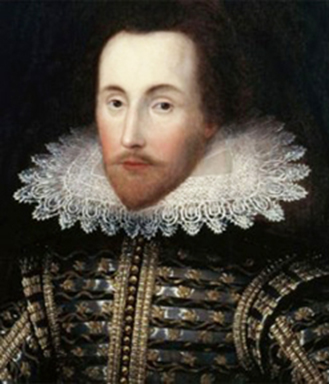
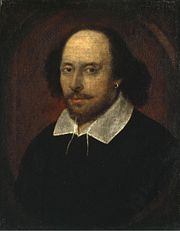


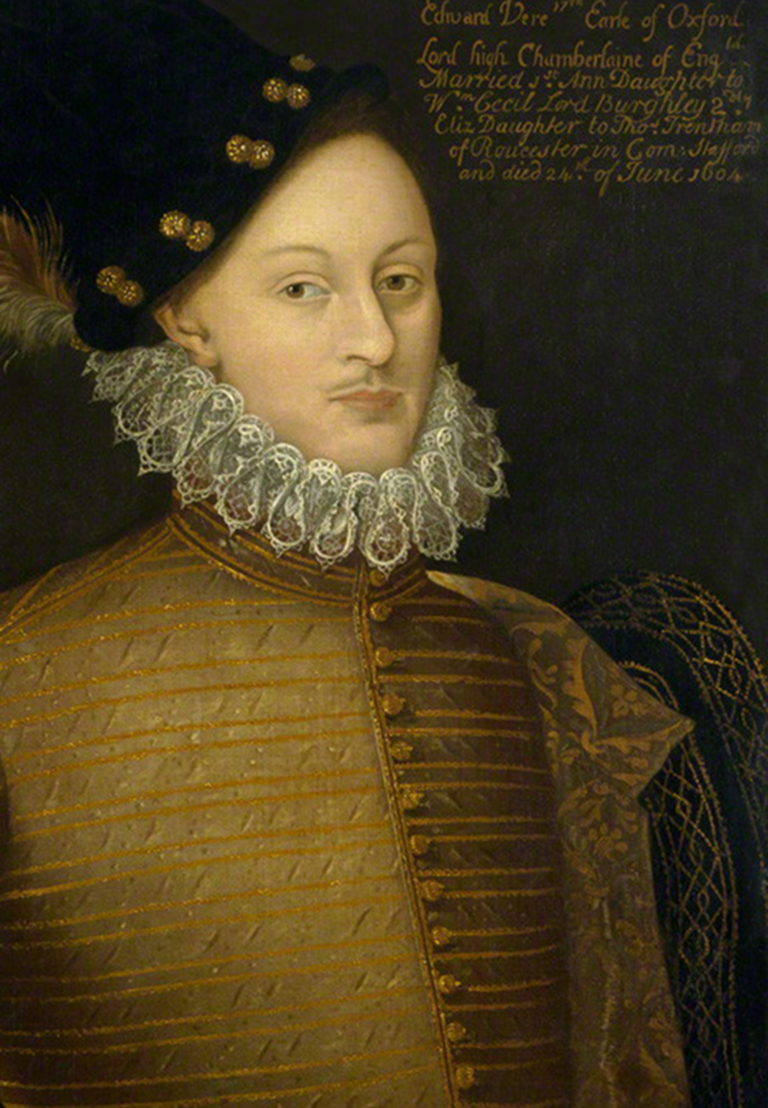
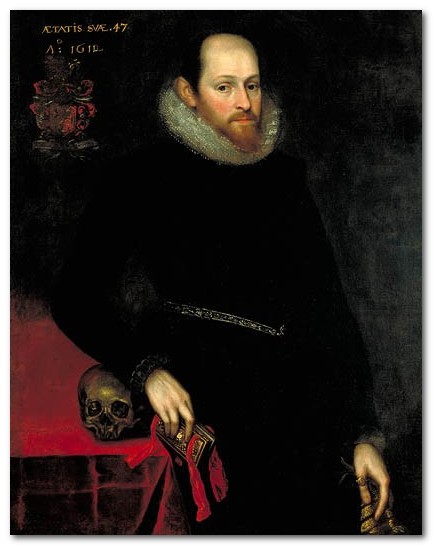


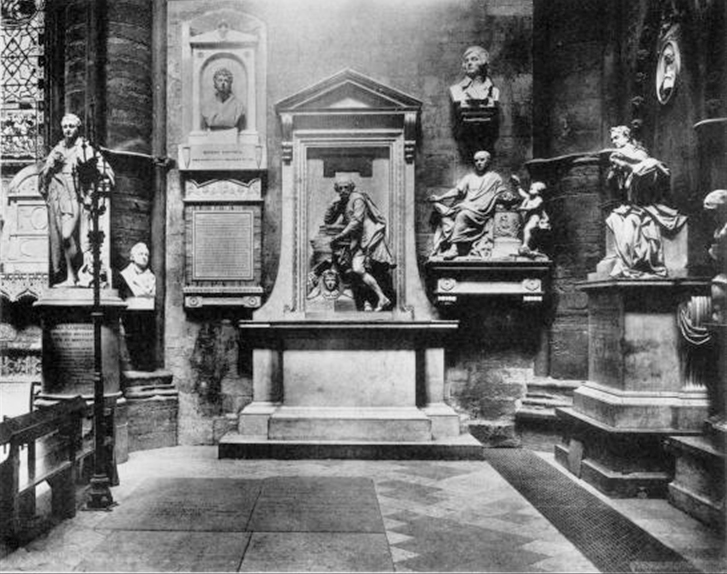
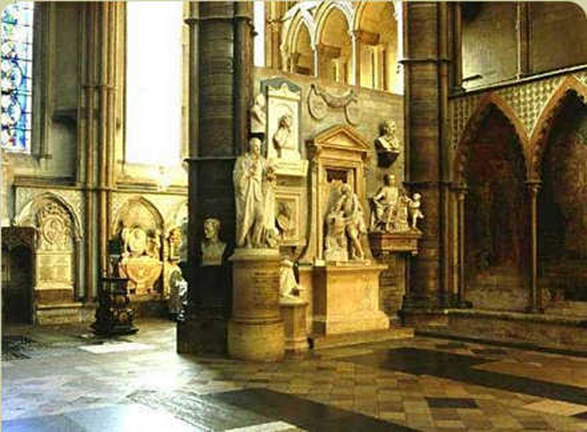

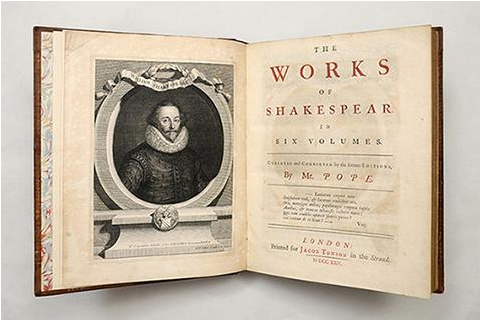
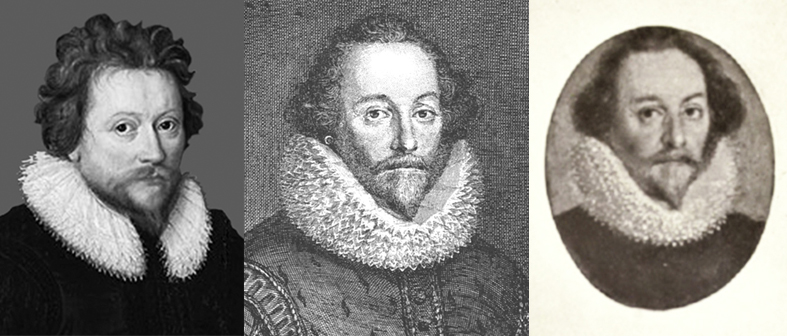


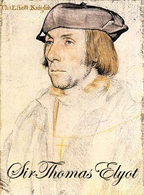


 He only mentions it twice by name, and then only in passing. It’s clear from the name that Twelfth Night takes place during the Christmas holidays, but nothing in the play itself connects the behavior of Sir Toby and his friends to a particular holiday, at least not to us today. Yet of all the paths that lead to our present celebration of Christmas, the one forged by Shakespeare is the widest and surest, leading as it did through the barren desert of the puritan Reformation to give back to the English, not the feudal style of merry-making, but through his creation of the London Stage, the joys of Theater and all that has developed from it, school plays and amateur theatricals, films and television. While the Stage began as a compensation for the loss of the old processions, it shows its origins through the furnishings of many of his plays.
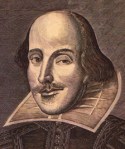 Constantly repeated in the traditional history of the British Stage is the notion that he showed no interest in his plays once they were performed. That his name appears nowhere in any record of publication apart from title pages, that there’s no record that William of Stratford was even in London for almost a decade before his death in 1616, suggests to those attempting to explain this unique behavior on the part of a theatrical impresario that he was somehow “above” dealing with publishers.
 politicworm